
Italian Sausage and Herb Stuffing
This Italian Sausage and Herb Stuffing is warm, savory, and packed with flavor.
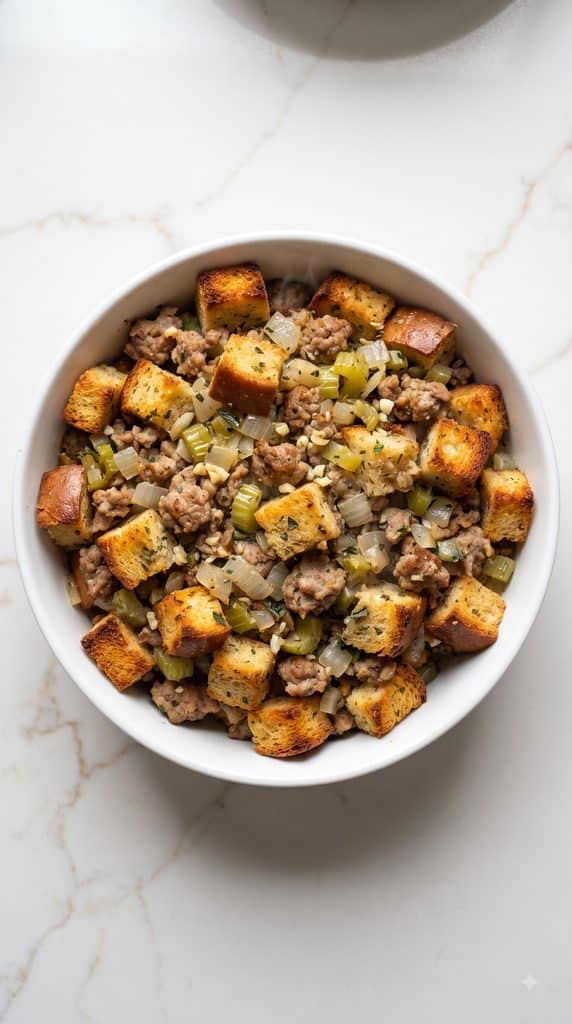
You get crispy bread on top, soft buttery bread underneath, browned sausage, onion, celery, garlic, and plenty of fresh herbs.
It is a great side dish for Thanksgiving, Christmas, or a cozy Sunday dinner.
Makes: 8 servings
Prep time: 25 minutes
Cook time: 50 minutes
Total time: About 1 hour 15 minutes
Why I Love This Recipe
Stuffing is one of those dishes that makes the whole kitchen smell good. I love the moment when the sausage, butter, onion, celery, garlic, and fresh herbs start cooking together. Before the stuffing even reaches the oven, the kitchen already smells like a holiday dinner.
The best part is the mix of textures. The broth and eggs keep the middle moist and tender, while baking the stuffing uncovered gives the bread on top those crisp, golden edges.
- Italian sausage adds rich, savory flavor.
- Fresh sage, thyme, and parsley give it a classic herb taste.
- Toasted bread absorbs the broth without turning into mush.
- Onion and celery add flavor and texture.
- Butter makes the stuffing rich without hiding the herbs.
- The top becomes golden and crisp while the middle stays moist.
What You’ll Need
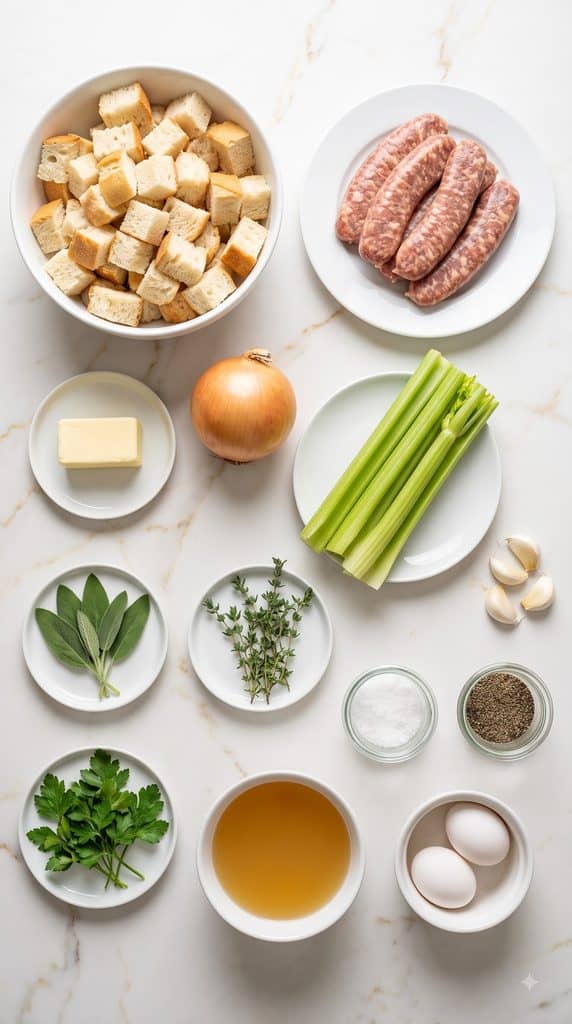
- 12 cups day-old French or Italian bread, cut into 1-inch cubes
- 1 pound mild Italian sausage, casings removed
- 6 tablespoons unsalted butter, divided
- 1 medium onion, diced
- 4 celery stalks, diced
- 4 cloves garlic, minced
- 2 tablespoons fresh sage, finely chopped
- 1 tablespoon fresh thyme leaves, chopped
- 1/4 cup fresh parsley, chopped
- 1 teaspoon salt
- 1/2 teaspoon ground pepper
- 2 1/2 cups low-sodium chicken broth
- 2 large eggs, lightly beaten
Recipe and Instructions
Step 1: Dry the Bread
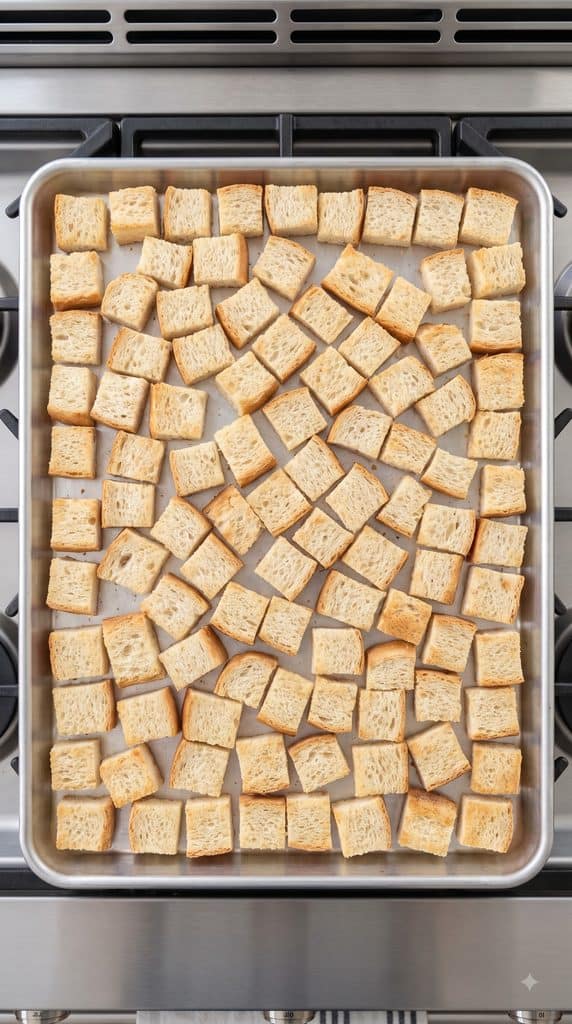
Heat the oven to 300°F (150°C). Spread 12 cups of 1-inch bread cubes in an even layer on a large baking sheet. Bake for 15 to 20 minutes, stirring once halfway through, until the cubes feel dry and lightly toasted but are not deeply browned. Remove them from the oven and set them aside. Raise the oven temperature to 375°F (190°C).
Step 2: Brown the Sausage
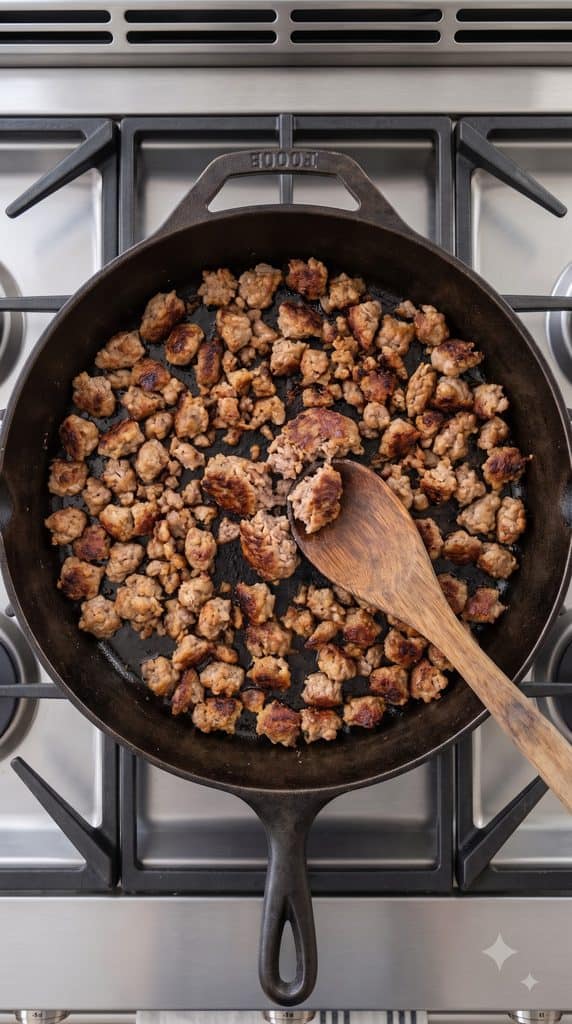
Place a large skillet over medium-high heat. Add 1 pound mild Italian sausage with the casings removed. Break it into small crumbles with a wooden spoon. Cook for 6 to 8 minutes, until the sausage is fully cooked with browned edges. Transfer the browned sausage to a large mixing bowl.
Step 3: Cook the Vegetables
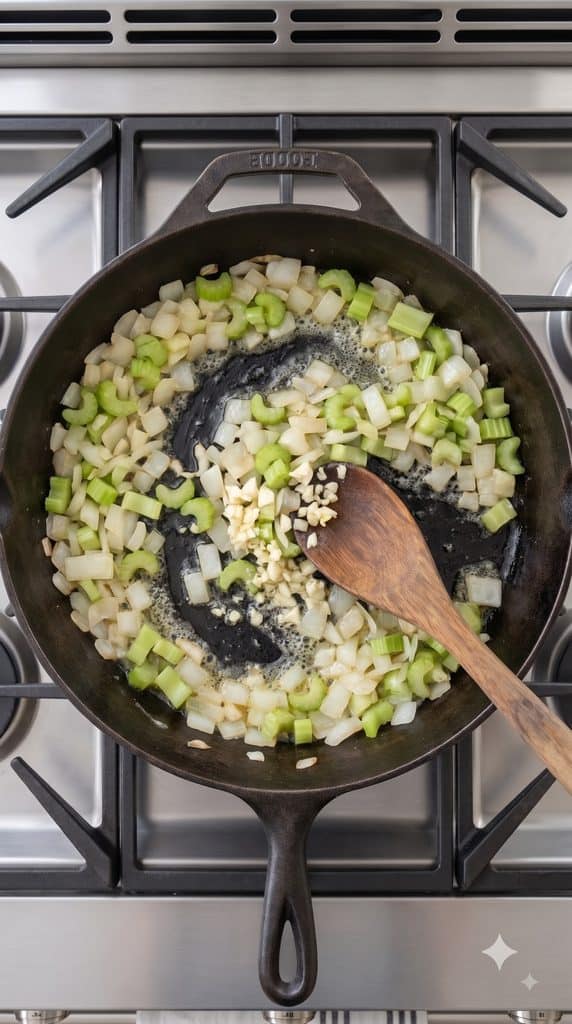
Reduce the heat to medium. Add 4 tablespoons unsalted butter to the same skillet. Once melted, add 1 medium diced onion and 4 diced celery stalks. Cook for 6 to 8 minutes, stirring often, until the onion is soft and translucent and the celery is tender but still holds its shape.
Add 4 cloves minced garlic and cook for another 30 seconds.
Step 4: Add the Herbs
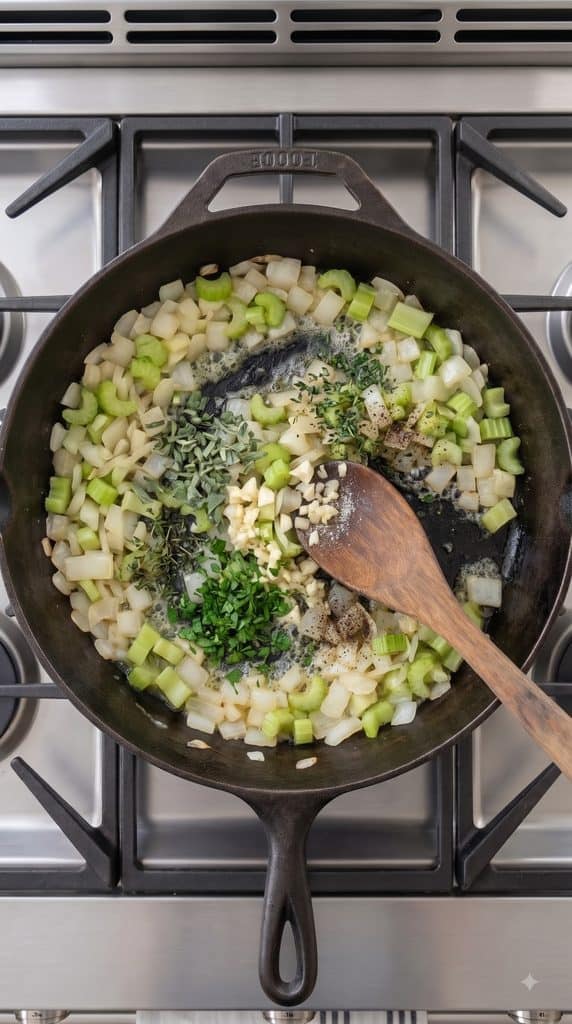
Keep the skillet over medium-low heat. Add 2 tablespoons finely chopped fresh sage, 1 tablespoon chopped fresh thyme leaves, 1/4 cup chopped fresh parsley, 1 teaspoon salt, and 1/2 teaspoon ground pepper to the cooked onion, celery, garlic, and butter.
Stir and cook for about 1 minute, just until the herbs smell fragrant. Remove the skillet from the heat.
Step 5: Combine the Bread, Sausage, and Vegetables
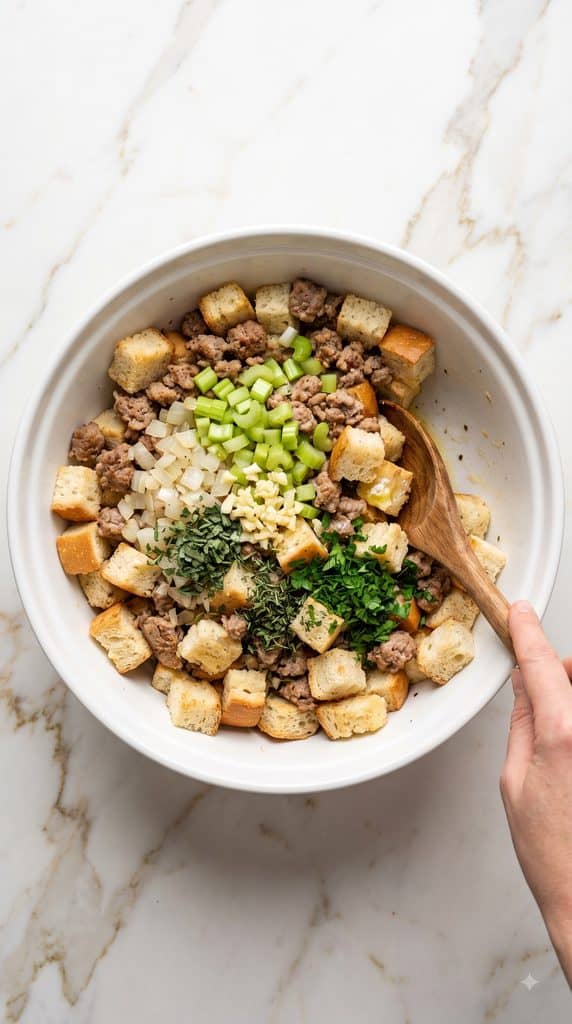
Place the 12 cups dried bread cubes in a large mixing bowl. Add the 1 pound browned crumbled Italian sausage. Add all of the cooked onion, celery, garlic, butter, sage, thyme, parsley, salt, and ground pepper mixture.
Gently toss everything together. Try not to crush the bread cubes.
Step 6: Add the Broth and Eggs
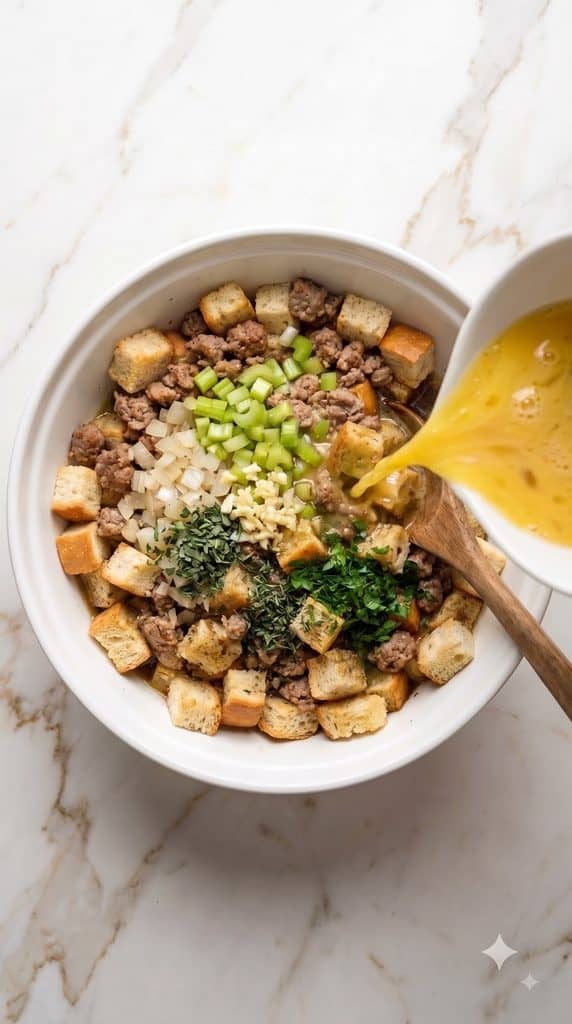
In a separate bowl, whisk 2 large eggs with 2 1/2 cups low-sodium chicken broth.
Slowly pour the mixture over the bread and sausage. Gently fold everything together until the bread is evenly moist. Let it sit for 5 minutes so the bread can absorb some of the liquid. The bread should be moist but should not turn into paste.
Step 7: Fill the Baking Dish
Use the remaining 2 tablespoons unsalted butter to grease a 9-by-13-inch baking dish. Transfer all of the stuffing mixture into the dish. Spread it into an even layer without pressing it down too firmly.
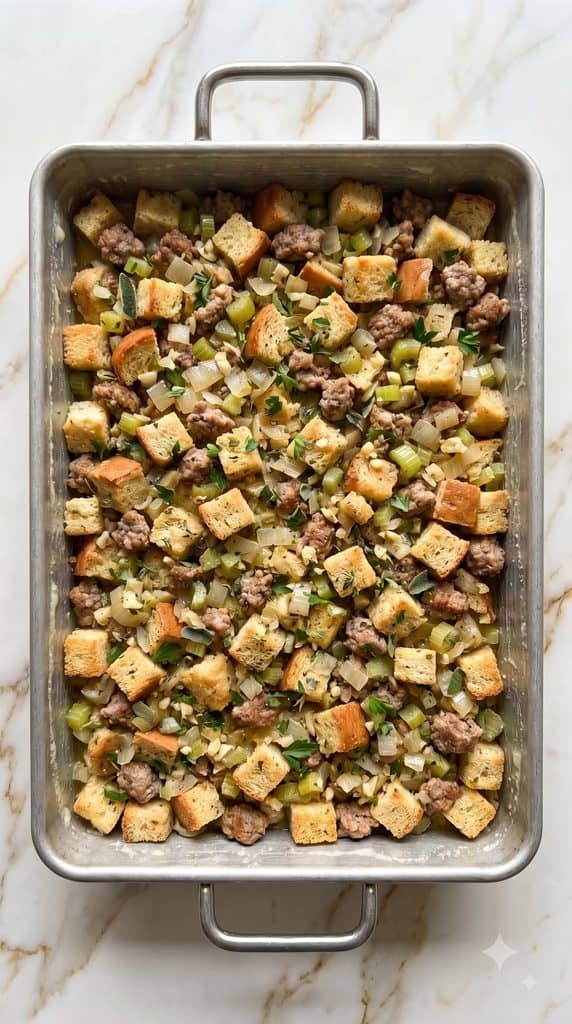
Step 8: Bake the Stuffing
Bake the stuffing at 375°F (190°C) for 35 to 40 minutes, until the center is hot and set and the bread on top is crisp and golden brown. For food safety, the center should reach 165°F (74°C).
Let the stuffing rest for 5 to 10 minutes before serving.
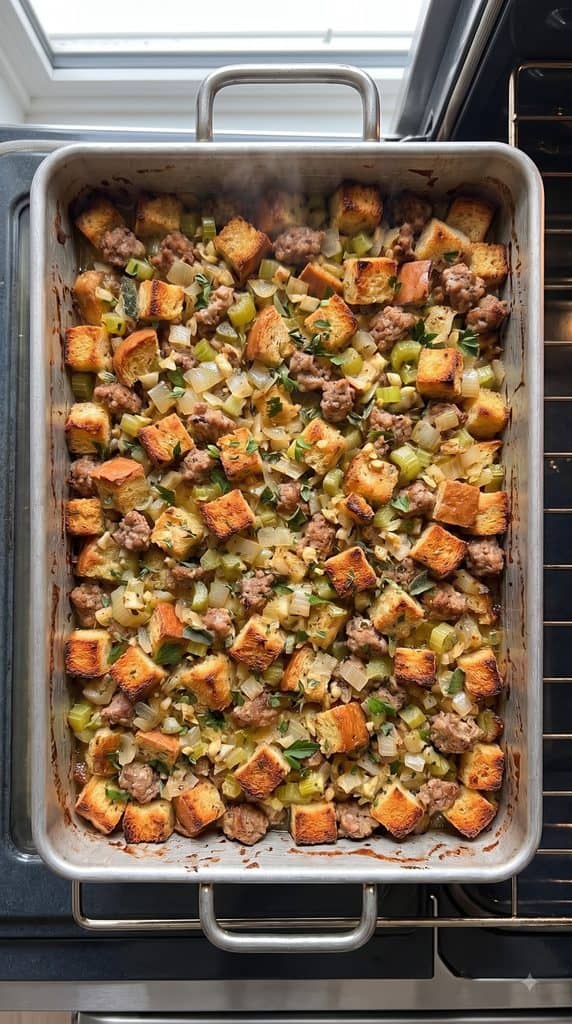
Step 9: Serve
Spoon the warm stuffing into a round white serving bowl. Keep the bread pieces loose so you can see the crisp tops, tender centers, sausage, vegetables, and herbs. Serve warm.
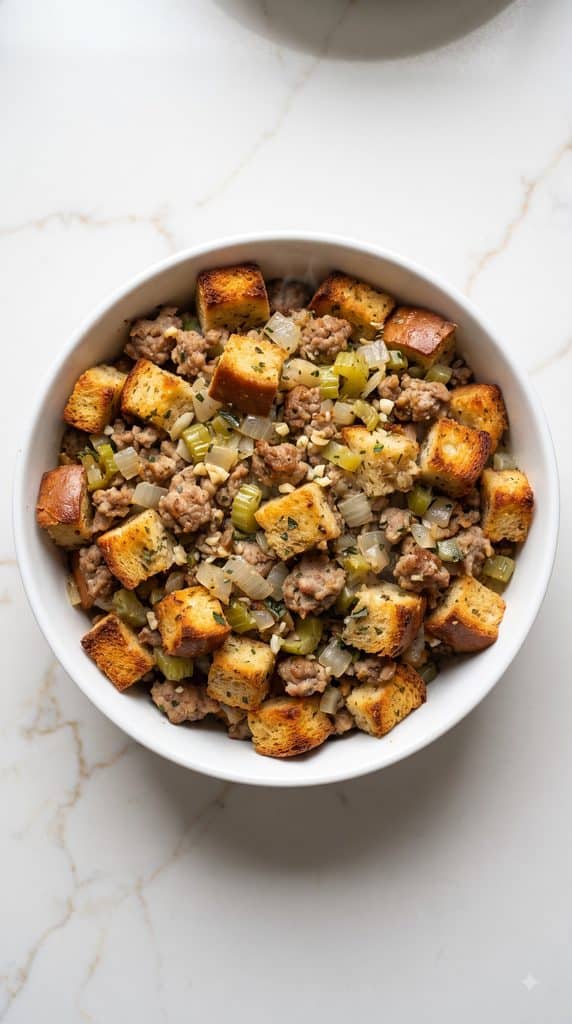
Why This Recipe Works (Quick Science)
Dry bread is important because it can soak up flavorful liquid without falling apart. Fresh, soft bread already holds a lot of moisture, so it can become mushy when you add broth.
Browning the sausage creates deeper savory flavors. Cooking the onion and celery in butter softens them and spreads their flavor through the fat.
The eggs help bind everything together as they cook. The broth gives the bread moisture and flavor. Baking the stuffing uncovered lets moisture escape from the surface, which is why the top becomes crisp while the middle stays soft.
Pro Tips
- Dry the bread well. This is one of the best ways to prevent mushy stuffing.
- Cut even bread cubes. About 1 inch is a good size. Tiny pieces can turn soft too quickly.
- Don’t pack the baking dish. Keep the mixture loose so heat can move through it.
- Add the broth slowly. You want moist bread, not bread floating in liquid.
- Give it time to rest. Five to 10 minutes after baking helps the stuffing set before serving.
Tools You’ll Need
- Large skillet
- Large mixing bowl
- Small mixing bowl
- 9-by-13-inch baking dish
- Large rimmed baking sheet
- Wooden spoon
- Whisk
- Chef’s knife
- Cutting board
- Measuring cups
- Measuring spoons
Substitutions and Variations
- Bread: French, Italian, sourdough, or sturdy white bread can work.
- Italian sausage: Use mild, sweet, or hot Italian sausage.
- Chicken broth: Turkey broth is a great choice for a holiday meal.
- Fresh herbs: Dried herbs can work in a pinch. Use about one-third as much because dried herbs have a stronger flavor.
- Celery: You can add another stalk if you like more crunch.
- Sausage-free version: Leave out the sausage and add a little more butter and vegetables.
- Extra savory flavor: Add sliced mushrooms and cook them with the onion and celery.
Make-Ahead Tips
You can dry the bread cubes 1 to 2 days ahead and keep them in an airtight container once completely cool.
The sausage and vegetable-herb mixture can also be cooked one day ahead. Cool it and store it covered in the refrigerator.
For the best texture, add the broth and eggs closer to baking time. You can assemble the stuffing several hours before dinner, cover it, refrigerate it, and then bake it. If it goes into the oven cold, it may need a few extra minutes to reach 165°F (74°C) in the center.
Common Mistakes
- Using very soft fresh bread: It can turn mushy instead of staying fluffy.
- Adding too much broth at once: Different breads absorb liquid differently. Pour slowly and watch the texture.
- Making tiny bread cubes: Small pieces break down faster.
- Skipping the sausage browning: Those browned edges add a lot of flavor.
- Packing the baking dish tightly: A loose layer gives you better texture.
- Burning the herbs: Fresh herbs only need a short time over the heat.
- Overbaking: This can dry out the center before serving.
What to Serve With
- Roast turkey
- Roast chicken
- Baked ham
- Mashed potatoes
- Turkey gravy
- Cranberry sauce
- Green beans
- Roasted Brussels sprouts
- Glazed carrots
- Sweet potato casserole
Macros Information
Approximate nutrition per serving when divided into 8 servings:
- Calories: about 450
- Protein: about 18 g
- Carbohydrates: about 40 g
- Fat: about 24 g
- Fiber: about 3 g
These numbers are estimates. The bread, sausage, butter, and broth you choose can change the final nutrition.
Leftovers and Storage
Let leftover stuffing cool, then transfer it to an airtight container. Refrigerate it within 2 hours and use it within 3 to 4 days.
For a crisp top, reheat stuffing in a baking dish at 350°F (175°C) until the center reaches 165°F (74°C). Cover it at first if it looks dry, then uncover it for the final few minutes.
You can also reheat a small serving in the microwave. It will stay moist, but you won’t get the same crisp top.
For longer storage, freeze cooled stuffing in a freezer-safe container. For best quality, use it within about 2 to 3 months.
FAQ
Q: What is the best bread for stuffing?
A: French bread, Italian bread, sourdough, and other sturdy breads work well. The most important thing is that the bread is dry before you add the broth.
Q: Can I use fresh bread?
A: Yes, but dry it in the oven first. Fresh bread can soak up the liquid too quickly and become mushy.
Q: Can I make this stuffing without sausage?
A: Yes. Leave out the sausage and add more vegetables if you like. You may also want another tablespoon or two of butter for richness.
Q: Why is my stuffing mushy?
A: The bread may have been too fresh, or too much broth may have been added. Dry bread and gradual liquid addition help prevent this.
Q: Why is my stuffing dry?
A: It may need more broth, or it may have baked too long. The mixture should look evenly moist before it goes into the baking dish.
Q: Can I prepare it the night before?
A: Yes. For the best texture, prepare the bread, sausage, and vegetables ahead, then add the broth and eggs closer to baking. If you fully assemble it ahead, keep it refrigerated and make sure the center reaches 165°F (74°C) when baked.
Q: Can I cook this stuffing inside a turkey?
A: This recipe is designed for a baking dish. Baking it separately makes the cooking time and final temperature easier to control.
Final Thoughts
Italian Sausage and Herb Stuffing brings together some of the best parts of a comfort-food side dish: crisp bread, a soft center, savory sausage, buttery vegetables, and plenty of fresh herbs.
Give the bread time to dry, brown the sausage well, and don’t pack the mixture too tightly. Those simple steps make a big difference. Serve it warm with your favorite roast and sides, then leave a comment about how your stuffing turned out or any questions you had while making it.
