
High Protein Greek Yogurt Bowl with Blueberries, Pomegranate and Peanut Butter
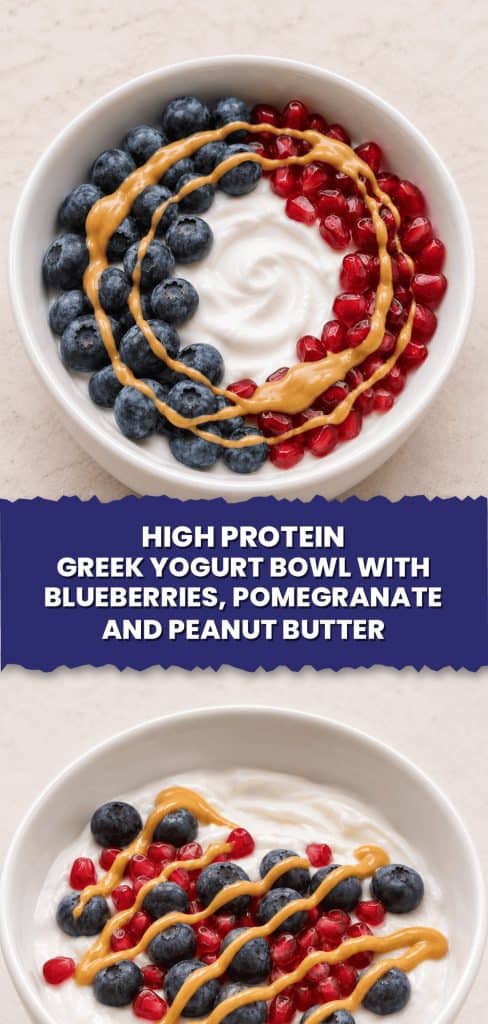
This High Protein Greek Yogurt Bowl with Blueberries, Pomegranate and Peanut Butter is creamy, tangy and full of fresh fruit. Blueberries bring gentle sweetness, while pomegranate adds juicy little pops. Peanut butter gives the bowl a rich finish without hiding the yogurt. You only need four ingredients and 10 minutes to make two generous servings.
Why I Love This Recipe
A good breakfast can be simple and still have plenty of flavor. Here, thick yogurt holds the fruit in place, so each spoonful can have something creamy, juicy and nutty. There is no oven to heat and no long list of extras to measure.
- Plenty of protein: Greek yogurt supplies most of the protein, so protein powder is not needed.
- Fresh contrast: The tart arils balance the mild blueberries and rich peanut butter.
- Easy portions: Make two bowls now, or keep the toppings separate for tomorrow.
- Just four ingredients: Each ingredient adds its own flavor or texture.
What You’ll Need
- Servings: 2 generous breakfast bowls
- Prep Time: 10 minutes
- Cook Time: 0 minutes
- Total Time: 10 minutes
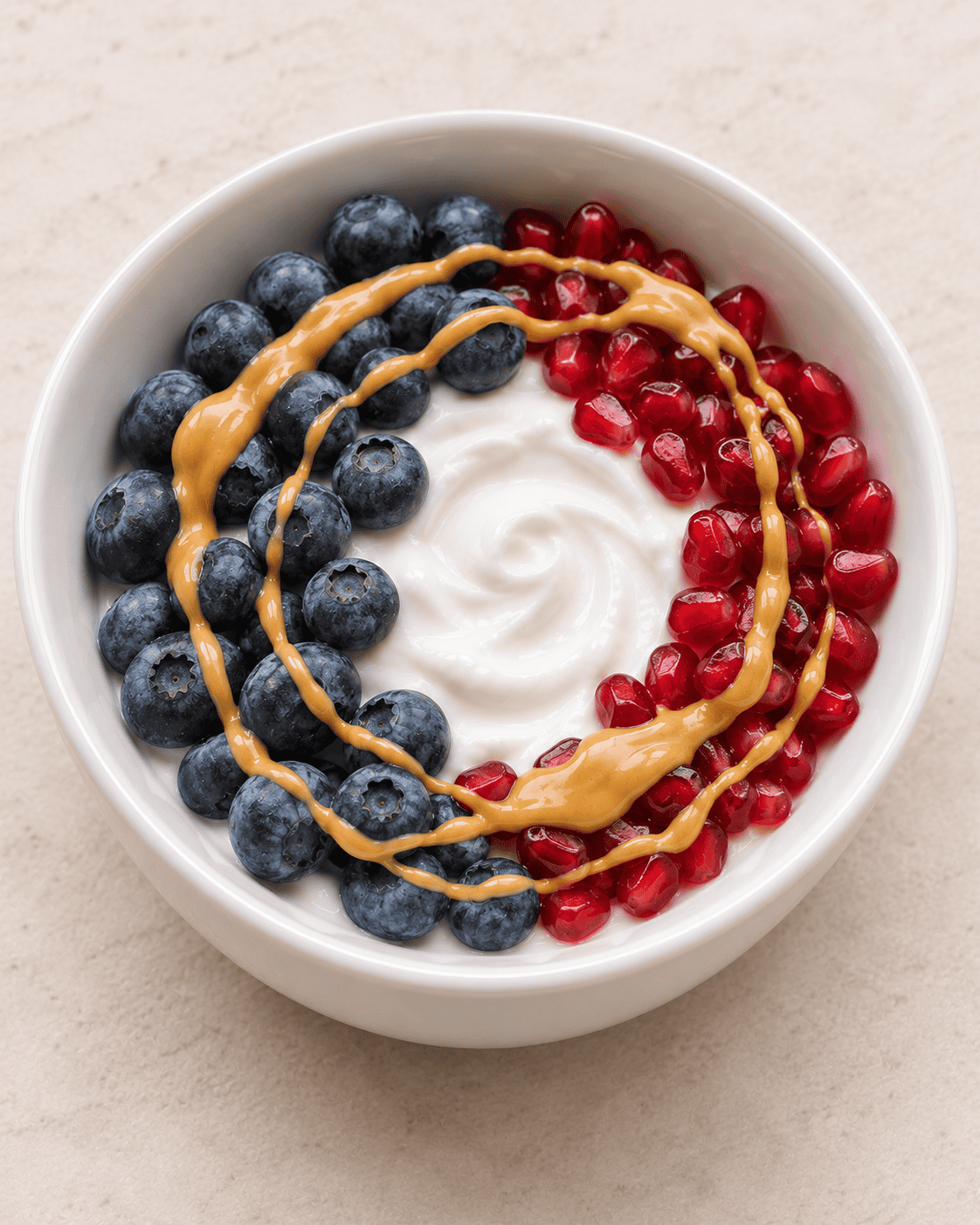
- 600 g plain nonfat Greek yogurt (about 2 1/2 cups; choose a thick yogurt with about 10 g protein per 100 g)
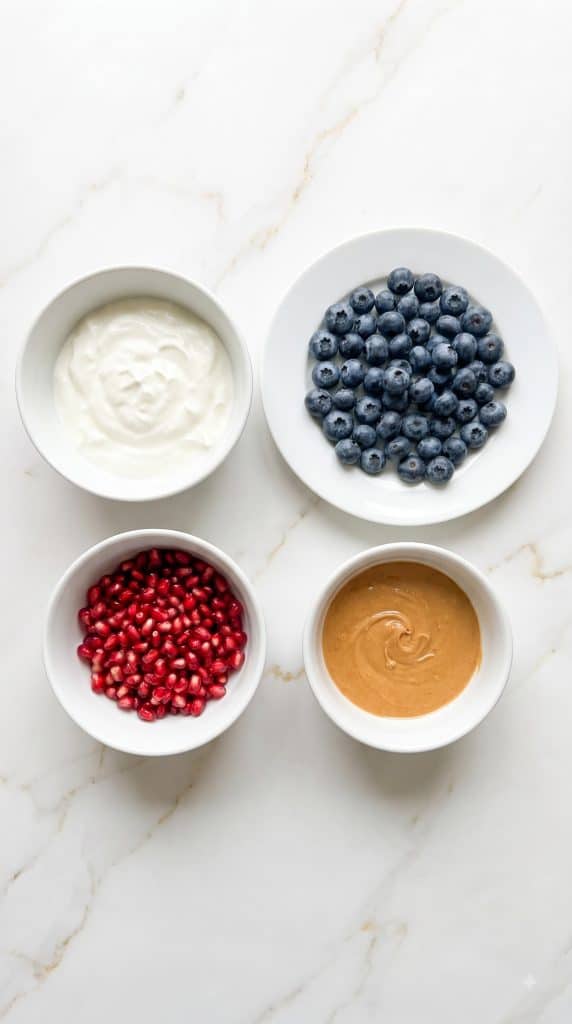
- 1 cup fresh blueberries (150 g)
- 1/2 cup pomegranate arils (80 g), with all white pith removed
- 2 tablespoons smooth natural peanut butter (32 g), well stirred and pourable
Use the weights for the most consistent portions. Choose unsweetened yogurt and peanut butter made mainly from peanuts. Ready-to-use pomegranate arils keep prep quick; avoid arils with a fermented smell or slimy surface.
Tools You Need
- Kitchen scale and measuring spoons
- Colander and clean kitchen towel
- Mixing spoon
- Two breakfast bowls
- Small bowl for stirring peanut butter
How to Make High Protein Greek Yogurt Bowl with Blueberries, Pomegranate and Peanut Butter
Get the fruit dry before you build the bowls so the yogurt stays thick.
Step 1: Prepare the Fruit
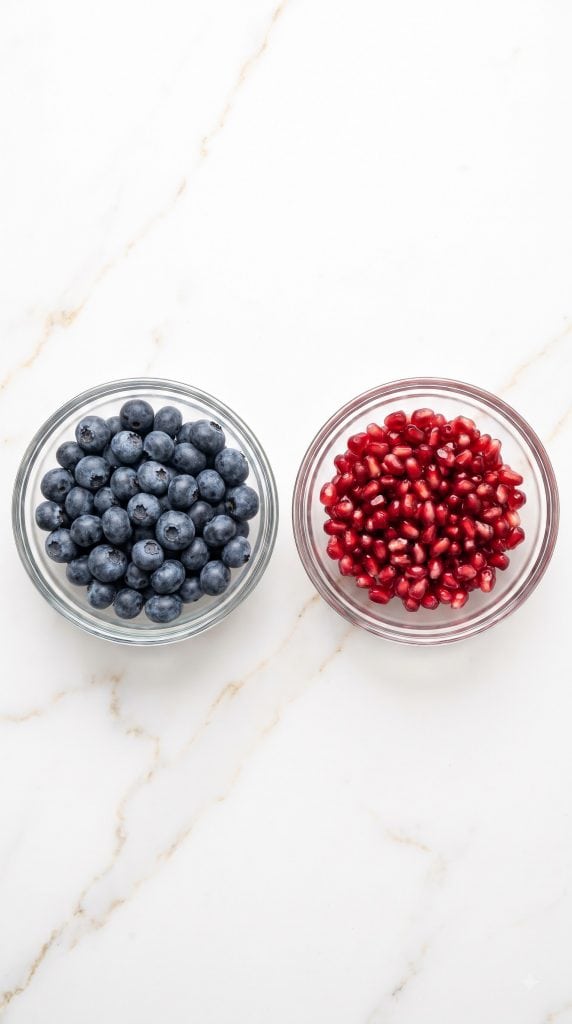
Rinse 1 cup blueberries (150 g), then pat them thoroughly dry with a clean towel.
Check 1/2 cup pomegranate arils (80 g) and pick out any white pith. Drain away any juice collected in the container.
Step 2: Smooth and Portion the Yogurt
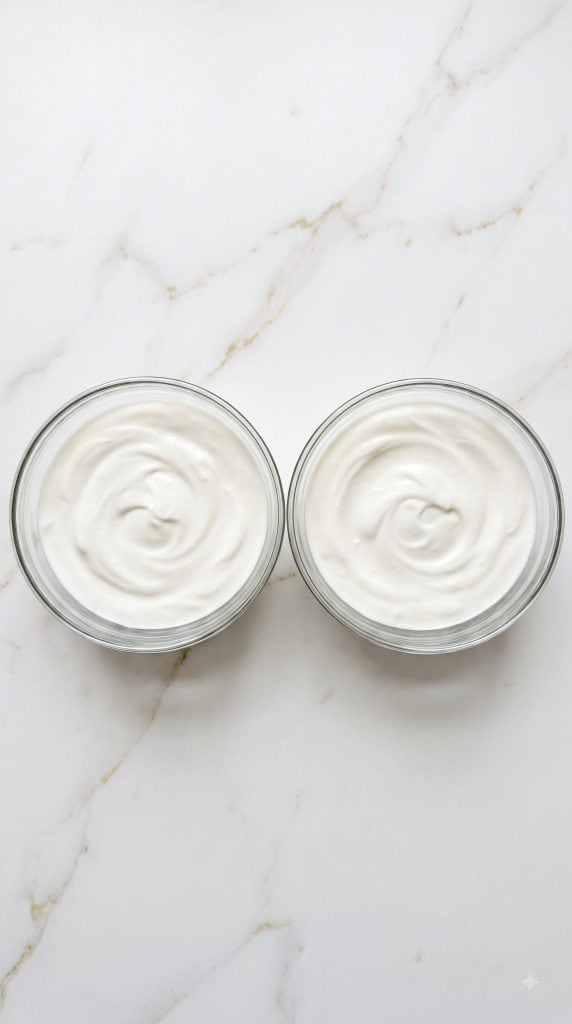
Stir 600 g plain nonfat Greek yogurt just until smooth. If a little whey has collected on top, stir it back in gently rather than beating air into the yogurt.
Divide the yogurt between two bowls, using 300 g per bowl. Make shallow swirls with the back of a spoon, leaving a thick base for the fruit.
Step 3: Add the Toppings and Serve
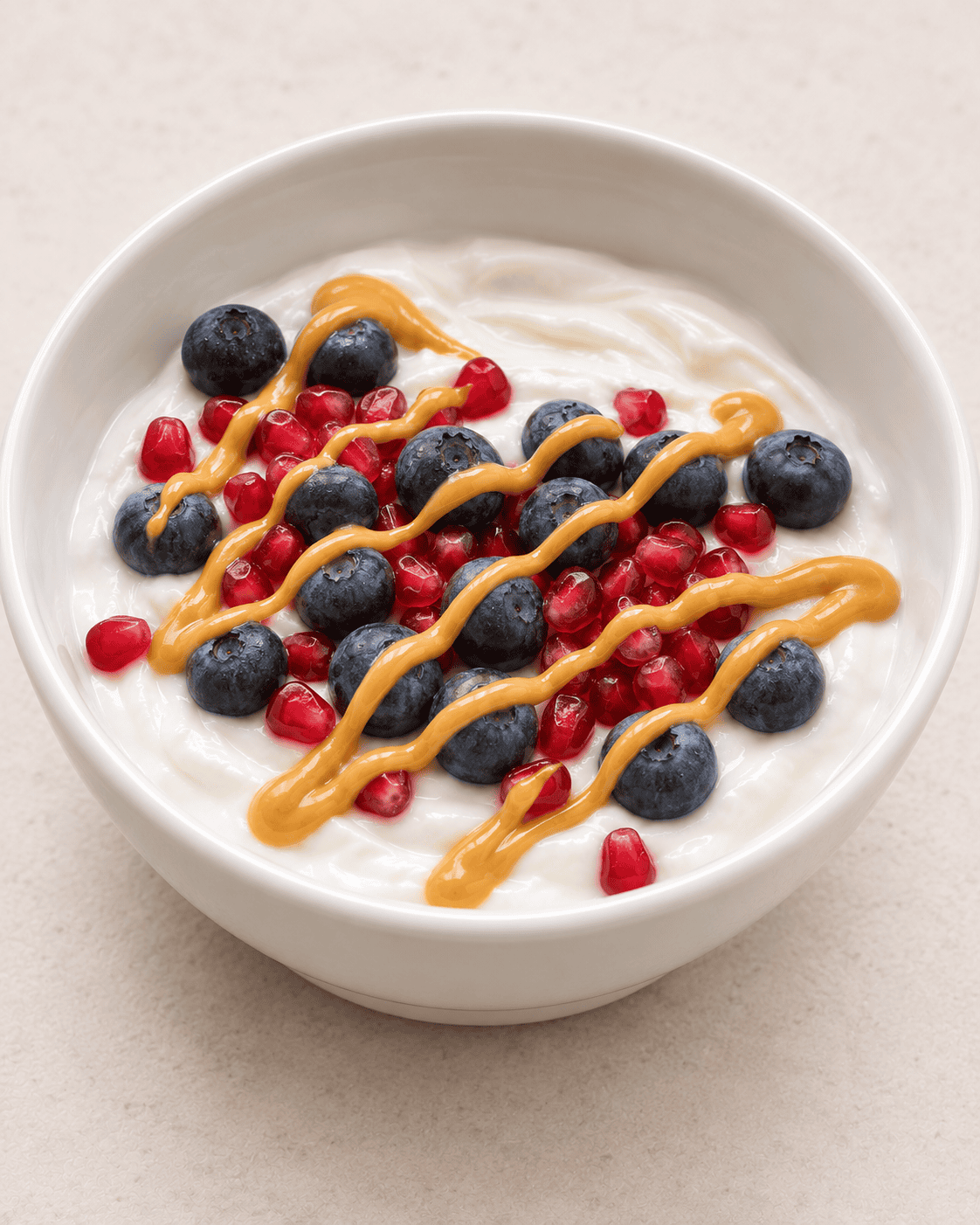
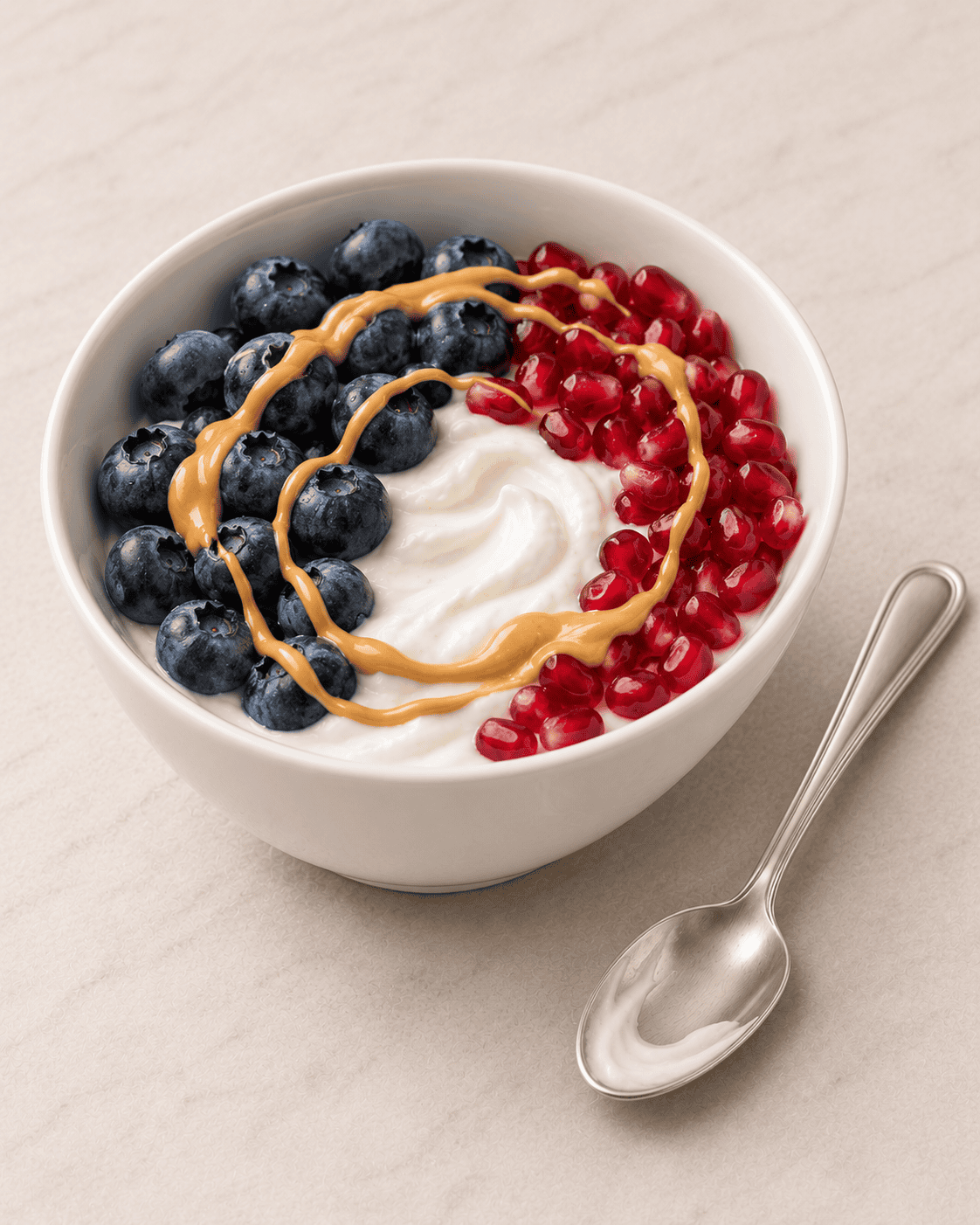
Divide the prepared 150 g blueberries and 80 g pomegranate arils between the bowls: 75 g blueberries and 40 g arils per serving. Arrange them in loose sections, leaving some yogurt showing.
Stir 2 tablespoons smooth natural peanut butter (32 g) until the oil is fully blended in. If it is too stiff, stand its closed jar in warm water for 5 minutes, then measure and stir again. Do not add water to the yogurt.
Drizzle 1 tablespoon peanut butter (16 g) over each bowl in narrow ribbons, crossing both the yogurt and fruit.
Serve right away, while the yogurt is cold and the fruit is firm. Scoop down through the topping and yogurt for a little of everything in each bite.
Why This Recipe Works (Quick Science)
Greek yogurt is strained, which removes some liquid and concentrates its solids, including protein. That gives it enough body to support fruit without turning into a thin puddle. Choosing a high-protein plain Greek yogurt does more for this bowl’s protein total than adding more peanut butter.
Dry blueberries and well-drained arils keep extra water out of the base. Stirring natural peanut butter blends its separated oil back into the peanut solids. It then falls in ribbons instead of leaving dry lumps. Keeping it on top also gives small bursts of nutty flavor against the tangy yogurt.
Common Mistakes to Avoid
- Using regular thin yogurt: It makes a looser bowl and usually provides less protein per serving.
- Adding wet fruit: Water left on the blueberries thins the yogurt around the edges.
- Skipping the peanut butter stir: Oil on top and dry paste underneath will not drizzle evenly.
- Adding every topping at once for storage: Fruit can release juice as it sits. Keep the parts separate when possible.
- Assuming all brands match: Sweetened yogurt and peanut butter can change both flavor and nutrition.
Pro Tips
Keep the yogurt cold until assembly. A chilled bowl also helps it stay cool while you add the fruit.
For a more tart bowl, use firm fresh blueberries. Riper berries will taste sweeter without adding a sweetener.
If your peanut butter never becomes pourable after stirring and gentle warming, spread it in small streaks over the yogurt instead. Avoid overheating it; hot peanut butter can soften the cold base.
Substitutions and Variations
Full-fat or reduced-fat plain Greek yogurt works well if you prefer a richer base. Protein and calories will vary by brand.
Thawed frozen blueberries are useful when fresh ones are unavailable. Drain them well first and expect purple streaks in the yogurt.
Almond butter or sunflower seed butter can replace peanut butter in the same measured amount. The flavor and nutrition will change. If avoiding an allergen, check all ingredient labels and handling information.
Make-Ahead Tips and Storage
Portion the plain yogurt into covered containers and refrigerate for up to 3 days, within the yogurt’s use-by date. Store the dry fruit separately and add the peanut butter just before eating.
An assembled bowl is best fresh but can be covered and refrigerated until the next day. Some fruit juice may collect; stir gently before eating. Freezing is not ideal because the yogurt can separate and the fruit softens after thawing.
What to Serve With High Protein Greek Yogurt Bowl with Blueberries, Pomegranate and Peanut Butter
These generous bowls work as breakfast on their own. If you want a larger meal, add whole-grain toast on the side. Keep extra toppings optional so the fruit, yogurt and peanut butter still lead the flavor.
Macros Information
Estimated per serving, based on plain nonfat Greek yogurt and the listed amounts. Brands and portion sizes will change these estimates; optional sides and substitutions are not included.
- Calories: 347 kcal
- Protein: 36 g
- Carbohydrates: 32 g
- Fat: 9 g
- Saturated Fat: 2 g
- Fiber: 4 g
- Sugar: 24 g
- Sodium: 150 mg
Frequently Asked Questions (FAQ)
Q: Do I need protein powder?
A: No. The measured Greek yogurt provides most of the protein. Pick a brand with about 10 g protein per 100 g for a similar estimate.
Q: Can I use vanilla Greek yogurt?
A: Yes, though it will taste sweeter. Check its protein and added sugar if you want to compare nutrition.
Q: Can I use regular yogurt?
A: Yes, but the base will be thinner and the protein total will usually be lower. Thick Greek yogurt gives the closest result.
Q: What if I cannot find pomegranate arils?
A: Ready-to-eat refrigerated or frozen arils both work. Thaw and drain frozen arils before adding them.
Q: Should I mix the peanut butter into the yogurt?
A: You can, but keeping it on top gives a stronger peanut flavor in each ribbon and keeps the yogurt white and tangy.
Q: How can I make a smaller snack?
A: Use half of one serving: 150 g yogurt, 37.5 g blueberries, 20 g pomegranate arils and 8 g peanut butter.
Q: Can I prepare the bowls the night before?
A: Yes. For the best texture, keep the yogurt and fruit in separate covered containers and assemble before eating.
Q: Is crunchy peanut butter okay?
A: Yes. Use the same amount, but expect small peanut pieces and less even ribbons.
Final Thoughts
This bowl brings thick yogurt, juicy fruit and a little peanut butter together with very little prep. Keep the toppings simple, drain the fruit well and enjoy it cold. Leave a comment with your favorite way to arrange the blueberries and pomegranate.
Happy cooking!
