
High Protein Cottage Cheese Egg Breakfast Bowl
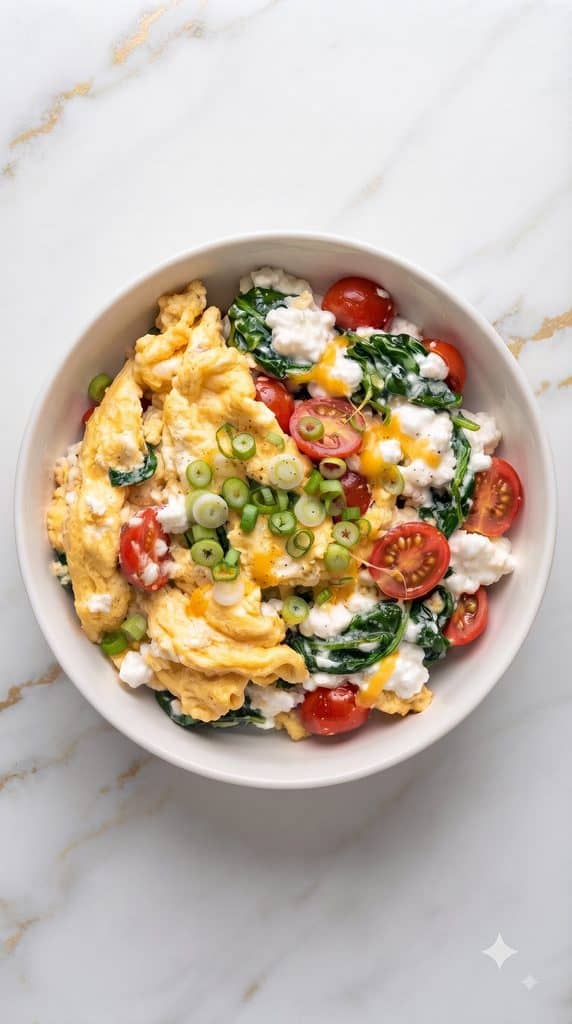
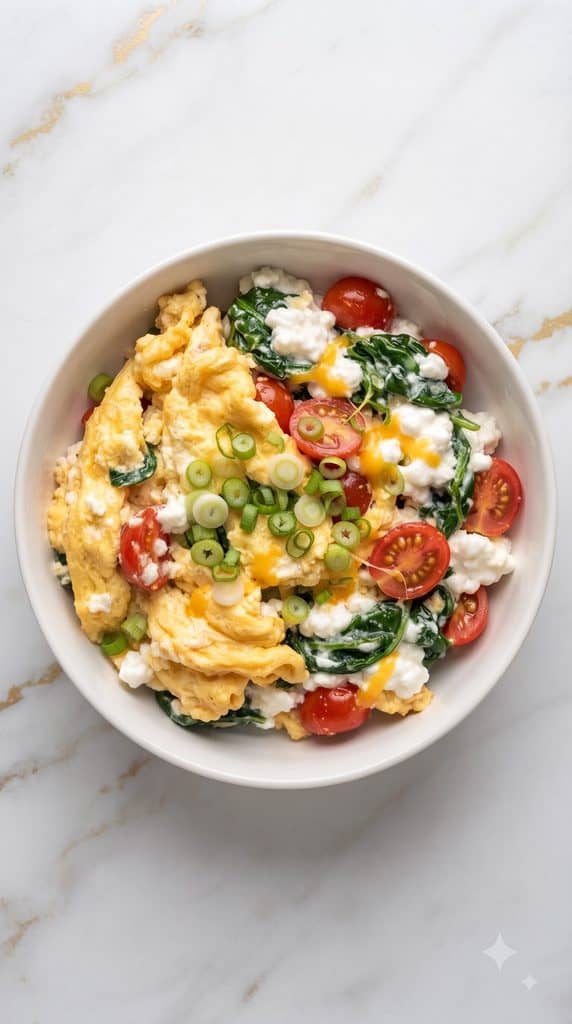
This High Protein Cottage Cheese Egg Breakfast Bowl is creamy, cheesy, and packed with protein to keep you full all morning.
Made with fluffy scrambled eggs, cottage cheese, fresh spinach, juicy tomatoes, and melted cheddar, it’s a simple breakfast that tastes amazing.
The best part?
It’s ready in just 15 minutes with easy ingredients you probably already have in your kitchen!

Why I Love This Recipe
I love a good breakfast, but I don’t always have time to make something fancy in the morning. For a while, I kept making plain scrambled eggs, and honestly, I started getting bored.
That’s when I tried adding cottage cheese to my eggs. I wasn’t sure what to expect at first, but the result was so good. The eggs turned out soft and creamy, and the cottage cheese added extra protein without making breakfast feel heavy.
Then I started adding spinach, tomatoes, and a little cheddar cheese. It became a colorful, filling breakfast that I could make in one skillet.
Now it’s one of my favorite ways to start the day, especially when I want something warm and satisfying.
Here’s why I keep making it:
- Packed with protein: Eggs and cottage cheese make a filling breakfast.
- Ready in 15 minutes: Perfect for busy mornings.
- Creamy and cheesy: Cottage cheese makes scrambled eggs extra soft.
- Simple ingredients: No fancy ingredients or special cooking skills needed.
- Easy to customize: Add your favorite vegetables, herbs, or cheese.
- One-skillet recipe: Less cleanup after breakfast.
- Great for meal prep: You can prepare most of the ingredients in advance.
It’s the kind of breakfast that feels comforting but still gives you a strong start to your day.
What You’ll Need
Recipe Details
- Prep Time: 5 minutes
- Cook Time: 10 minutes
- Total Time: 15 minutes
- Servings: 2
- Cooking Method: Stovetop
- Difficulty: Easy
- Meal Type: Breakfast
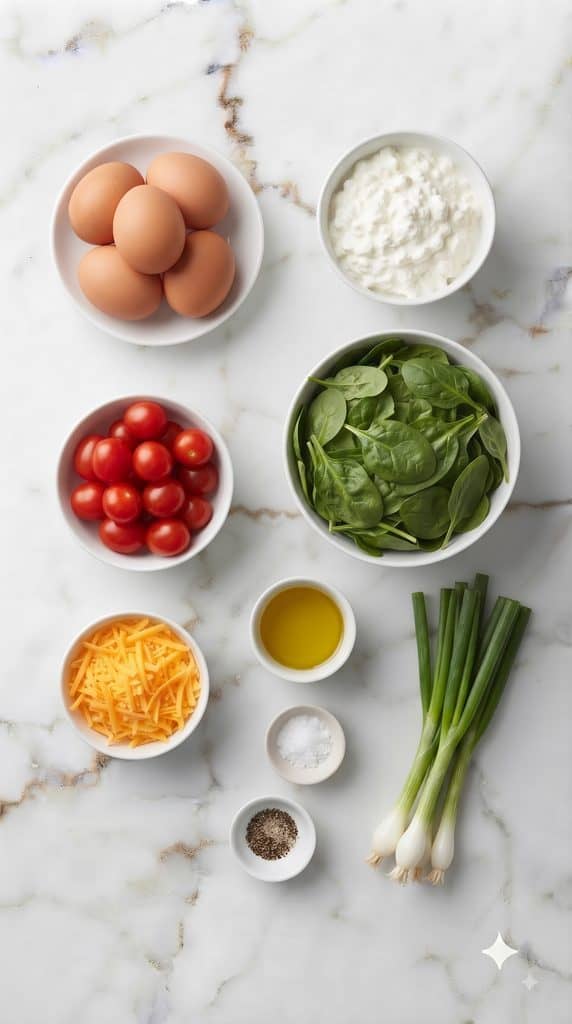
Ingredients
For the Breakfast Scramble:
- 4 large eggs
- 1 cup cottage cheese (2% or full-fat)
- 2 cups fresh baby spinach
- ½ cup cherry tomatoes, halved
- ¼ cup shredded sharp cheddar cheese
- 1 teaspoon olive oil
- ¼ teaspoon salt
- ⅛ teaspoon ground pepper
For Garnish:
– 2 tablespoons fresh green onions, thinly sliced
Tools You Need
You don’t need much equipment to make this easy breakfast.
- Medium nonstick skillet
- Wooden or silicone spatula
- Medium mixing bowl
- Fork or small whisk
- Sharp knife
- Cutting board
- Measuring cups and spoons
- Two round serving bowls
A nonstick skillet works best because it helps keep the eggs soft and prevents them from sticking.
How to Make High Protein Cottage Cheese Egg Breakfast Bowl
This breakfast comes together quickly, so it’s helpful to have all your ingredients ready before turning on the stove.
Step 1: Prepare the Vegetables
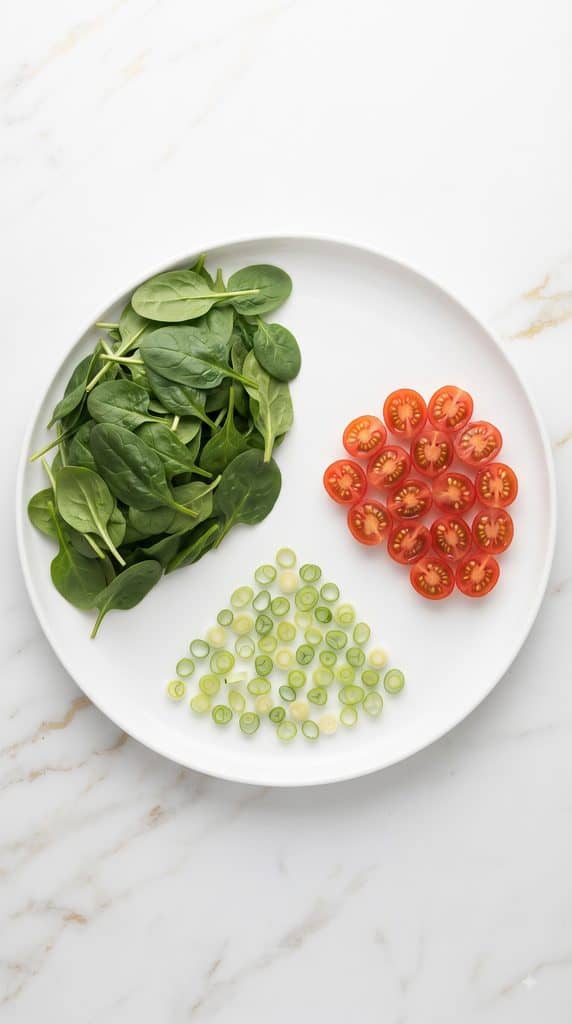
Wash and dry 2 cups fresh baby spinach.
Cut ½ cup cherry tomatoes in half.
Thinly slice 2 tablespoons fresh green onions and set them aside for garnish.
Keep the spinach and tomatoes separate so they’re ready to cook.
Step 2: Mix the Eggs and Cottage Cheese
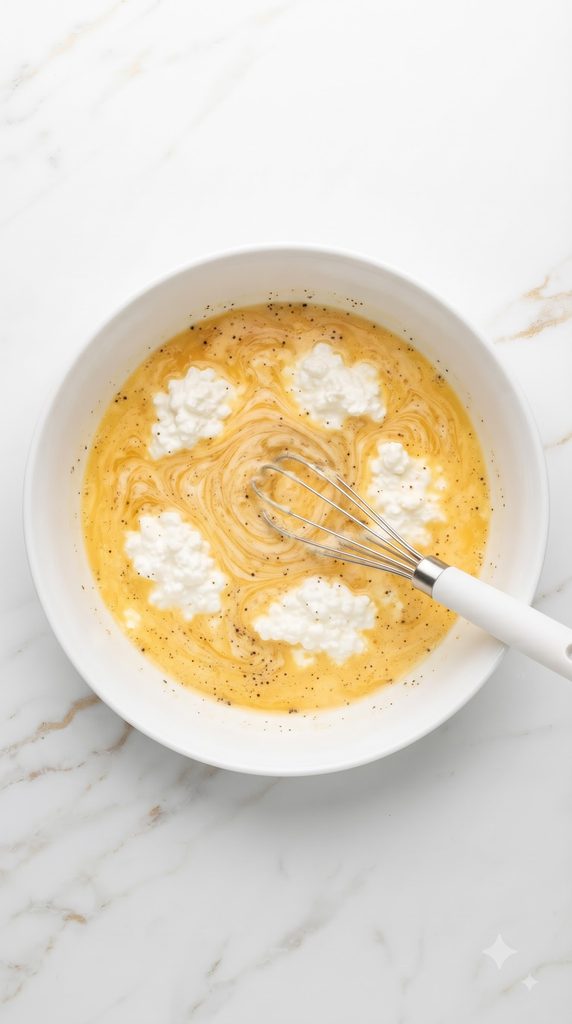
Crack 4 large eggs into a medium mixing bowl.
Add 1 cup cottage cheese, ¼ teaspoon salt, and ⅛ teaspoon ground pepper.
Use a fork or whisk to gently mix everything together.
The mixture should look creamy, with small cottage cheese curds still visible.
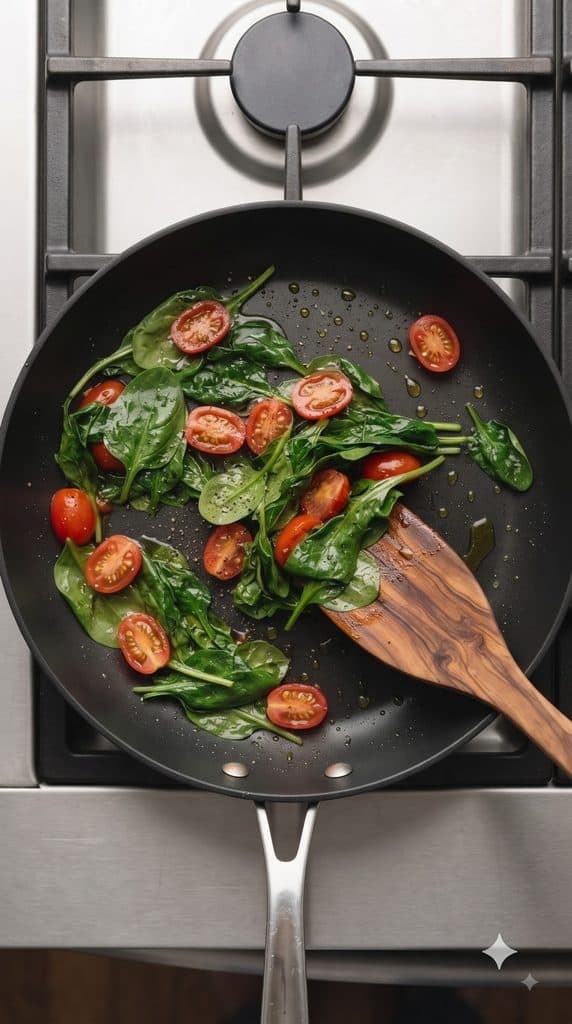
Step 3: Cook the Spinach and Tomatoes
Heat 1 teaspoon olive oil in a medium nonstick skillet over medium heat.
Add the prepared 2 cups baby spinach and ½ cup halved cherry tomatoes.
Stir gently until the spinach wilts and the tomatoes begin to soften.
If the tomatoes release extra moisture, let most of it cook away before adding the eggs.
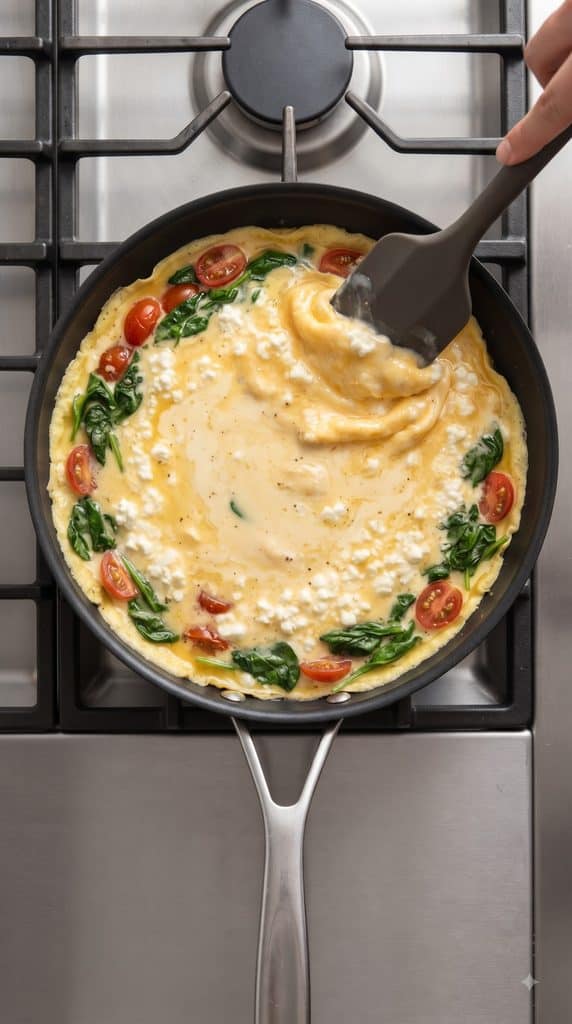
Step 4: Add the Egg Mixture
Reduce the skillet to medium-low heat.
Pour the prepared mixture of 4 eggs, 1 cup cottage cheese, ¼ teaspoon salt, and ⅛ teaspoon ground pepper over the cooked spinach and tomatoes.
Allow the eggs to begin setting around the edges.
Use a spatula to gently push the eggs toward the center, creating soft folds.
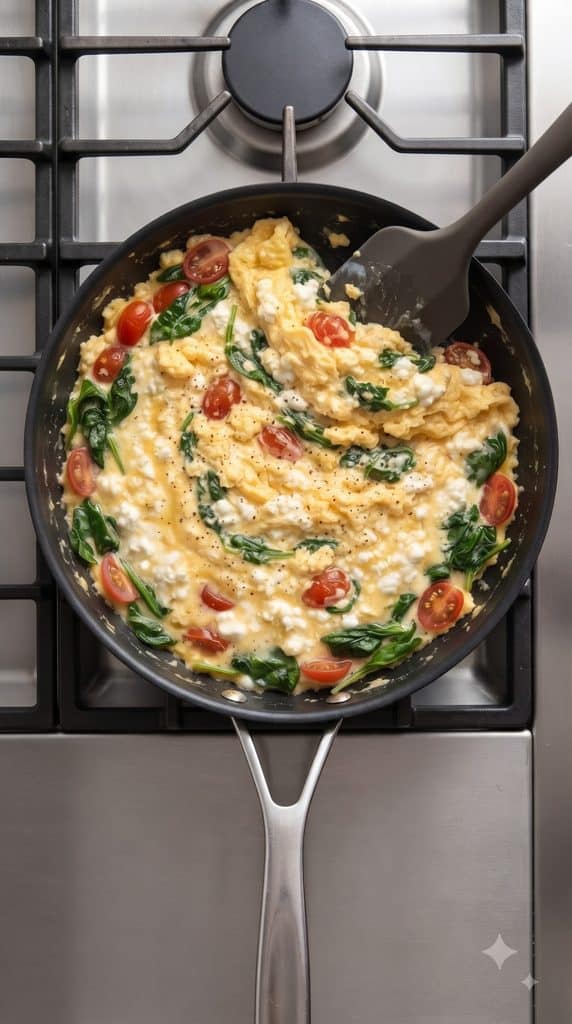
Step 5: Gently Scramble the Eggs
Continue cooking over medium-low heat.
Use the spatula to slowly fold the eggs, moving the cooked portions toward the center.
Avoid stirring too quickly.
The eggs should form soft, fluffy curds with creamy cottage cheese mixed throughout.
Cook until the eggs are fully set, with no runny egg remaining, and reach 160°F (71°C).
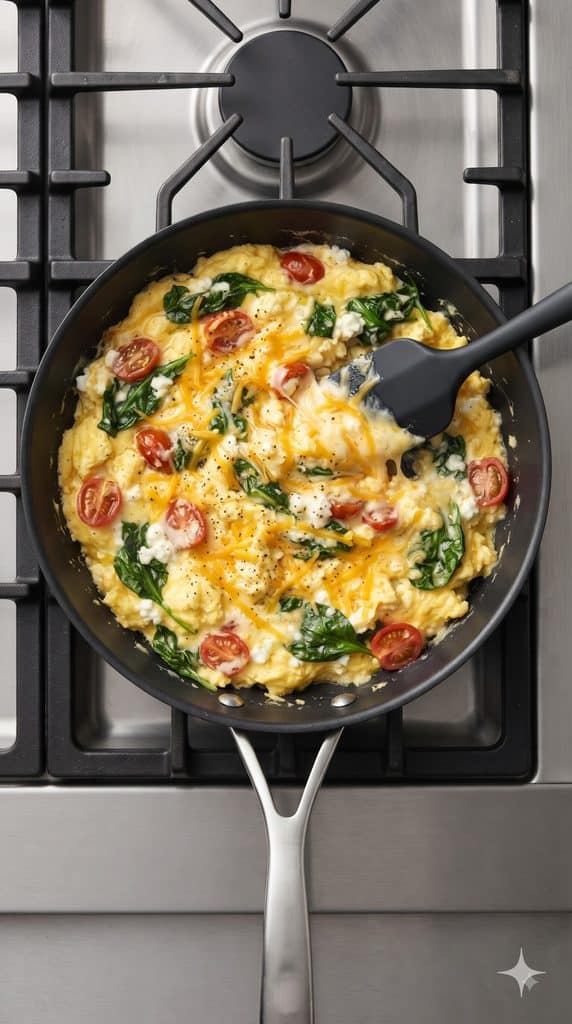
Step 6: Add the Cheddar Cheese
Sprinkle ¼ cup shredded sharp cheddar cheese evenly over the cooked eggs.
Reduce the heat to low and gently fold the cheese into the scramble.
Let the cheddar melt completely, creating small pockets of creamy cheese between the eggs.
Remove the skillet from the heat.
Step 7: Assemble the Breakfast Bowls
Divide the cheesy egg scramble evenly between 2 round white serving bowls.
Spoon the eggs into the center of each bowl, keeping the fluffy texture.
Sprinkle the prepared 2 tablespoons thinly sliced green onions over the two bowls.
Serve warm while the eggs are creamy and the cheese is melted.
Pro Tips
- Use full-fat or 2% cottage cheese: These options create a creamier texture than fat-free cottage cheese.
- Keep the heat low: Cooking eggs too quickly can make them rubbery and cause the cottage cheese to release extra moisture.
- Don’t overmix the eggs: Gentle folding creates larger, softer scrambled egg curds.
- Drain watery vegetables: If your tomatoes release too much liquid, cook away the extra moisture before adding the eggs.
- Shred your own cheddar: Freshly shredded cheese often melts more smoothly than packaged shredded cheese.
Why This Recipe Works (Quick Science)
This breakfast tastes creamy and rich without needing heavy cream or butter.
1. Cottage cheese adds protein and moisture.
Cottage cheese contains casein protein and moisture, which help give the scrambled eggs a creamy texture. It also boosts the protein content without adding more eggs.
2. Gentle heat keeps eggs tender.
Egg proteins tighten as they cook. Too much heat makes them squeeze out moisture, creating dry, rubbery eggs.
Cooking over medium-low heat helps the eggs form soft curds while keeping them moist.
3. Spinach adds nutrients without overpowering the flavor.
Spinach cooks down quickly and blends into the eggs. It adds fiber, vitamins, and minerals without changing the overall flavor too much.
4. Cheddar adds richness and flavor.
Sharp cheddar has a strong, savory taste, so a small amount goes a long way.
5. Tomatoes balance the creamy ingredients.
Cherry tomatoes add freshness and mild acidity, which helps balance the rich eggs and cheese.
Substitutions and Variations
This breakfast is easy to customize based on what you enjoy.
- Egg whites: Replace 2 whole eggs with ½ cup liquid egg whites for a lighter version.
- Feta cheese: Replace cheddar with crumbled feta for a tangy flavor.
- Mozzarella: Use shredded mozzarella for a milder, stretchy cheese.
- Mushrooms: Add cooked sliced mushrooms for extra flavor.
- Bell peppers: Add finely diced bell peppers for more crunch and sweetness.
- Kale: Replace spinach with chopped kale, cooking it until tender before adding the eggs.
- Turkey sausage: Mix in cooked turkey sausage for extra protein.
- Spicy version: Add hot sauce or crushed red pepper flakes.
- Fresh herbs: Try chopped parsley, basil, or chives instead of green onions.
Common Mistakes to Avoid
1. Cooking the eggs over high heat
High heat can make the eggs dry and rubbery.
Fix: Use medium-low heat and gently fold the eggs as they cook.
2. Using watery cottage cheese
Some cottage cheese brands contain more liquid than others.
Fix: If the cottage cheese looks very watery, drain off a little liquid before adding it to the eggs.
3. Adding too many vegetables
Extra vegetables can release moisture and make the scramble watery.
Fix: Cook vegetables first and remove excess liquid before adding the eggs.
4. Stirring the eggs too much
Constant stirring breaks the eggs into tiny pieces and can change the fluffy texture.
Fix: Gently push and fold the eggs instead of stirring quickly.
5. Adding cheddar too early
Cheese can stick to the skillet or become oily if heated too long.
Fix: Add the cheddar when the eggs are nearly finished cooking.
What to Serve With
This breakfast bowl is filling on its own, but you can add a simple side to make it even better.
- Whole-grain toast: Perfect for scooping up creamy scrambled eggs.
- Fresh avocado: Adds healthy fats and a creamy texture.
- Roasted breakfast potatoes: A warm, crispy side that pairs well with cheesy eggs.
- Fresh berries: Strawberries, blueberries, or raspberries add a sweet, refreshing contrast.
- Sliced oranges: A fresh and juicy side.
- Greek yogurt: Adds even more protein when you need a larger breakfast.
My favorite pairing is a slice of toasted whole-grain bread with a few avocado slices.
Make-Ahead Tips
Although this recipe tastes best fresh, you can prepare most of the ingredients ahead of time.
- Prepare the vegetables: Wash the spinach, cut the tomatoes, and slice the green onions in advance.
- Shred the cheddar: Store the shredded cheese in an airtight container in the refrigerator.
- Measure the cottage cheese: Portion it into a covered container so it’s ready to use.
- Prepare breakfast containers: Keep the vegetables and cheese organized in separate containers for easy morning cooking.
For the best texture, whisk and cook the eggs just before serving.
Leftovers and Storage
Refrigerator
Let the cooked eggs cool slightly, then transfer them to an airtight container.
Store in the refrigerator for up to 3–4 days, refrigerating within 2 hours of cooking.
Freezer
You can freeze the cooked egg scramble for up to 1 month, but the texture may become slightly watery after thawing because of the cottage cheese and vegetables.
For the best results, enjoy this recipe fresh or refrigerated.
Reheating
Place the eggs in a microwave-safe bowl and cover loosely.
Reheat in short intervals, stirring gently between each one, until heated through to 165°F (74°C).
You can also reheat the eggs in a nonstick skillet over low heat.
Avoid overheating because the eggs may become dry.
Macros Information
Estimated Nutrition Per Serving
This recipe makes 2 servings.
| Nutrient | Amount |
|---|---|
| Calories | Approximately 350 kcal |
| Protein | 33 g |
| Carbohydrates | 12 g |
| Fat | 19 g |
| Fiber | 2 g |
| Sugar | 5 g |
These numbers are estimates based on 2% cottage cheese, large eggs, and the other listed ingredients.
Actual nutrition may vary depending on the brands and portion sizes.
Want even more protein?
- Add ½ cup liquid egg whites to the egg mixture.
- Use a high-protein cottage cheese.
- Serve with turkey sausage.
- Add a side of plain Greek yogurt.
Frequently Asked Questions
Q: Can you really put cottage cheese in scrambled eggs?
A: Yes! Cottage cheese makes scrambled eggs extra creamy while adding protein. The flavor is mild, so it blends well with eggs and cheese.
Q: Will I taste the cottage cheese?
A: Not much. Cottage cheese has a mild flavor, and the cheddar, eggs, and vegetables help balance it. You may notice small soft curds, but they blend into the scramble.
Q: Can I blend the cottage cheese before adding it?
A: Absolutely! Blend the cottage cheese until smooth if you prefer eggs without visible curds.
Q: Can I use egg whites instead of whole eggs?
A: Yes. You can replace some or all of the whole eggs with liquid egg whites. Just keep the heat low because egg whites can become rubbery if overcooked.
Q: Is this recipe good for weight loss?
A: It can fit into a balanced eating plan. The protein from eggs and cottage cheese may help you feel full and satisfied. Your overall portions and daily food intake matter most.
Q: Can I make this breakfast without cheese?
A: Yes. You can leave out the shredded cheddar. The cottage cheese will still add creaminess and protein.
Q: Can I use frozen spinach?
A: Yes! Thaw the frozen spinach completely and squeeze out the extra water before adding it to the skillet. Use about ½ cup thawed, drained spinach in place of the 2 cups fresh spinach.
Q: How do I keep my scrambled eggs fluffy?
A: Cook them over medium-low heat, fold them gently, and avoid cooking longer than needed. Cottage cheese also helps create a soft texture.
Q: Can I make this recipe ahead of time?
A: Yes. You can store the cooked scramble in the refrigerator for up to 3–4 days. However, the texture is best when the eggs are freshly cooked.
Q: Is this breakfast gluten-free?
A: The main ingredients are naturally gluten-free, but check the labels on your cottage cheese, shredded cheese, and seasonings if you need to avoid gluten.
Final Thoughts
This High Protein Cottage Cheese Egg Breakfast Bowl is one of those simple recipes that makes breakfast feel a little more special.
The fluffy eggs, creamy cottage cheese, tender spinach, juicy tomatoes, and melted cheddar come together in a warm, satisfying bowl that’s easy to make any morning.
I love that it uses everyday ingredients, takes just 15 minutes, and gives you plenty of protein to start your day.
Whether you’re trying to eat more protein, looking for a quick breakfast, or simply want something different from plain scrambled eggs, this recipe is worth adding to your morning routine.
Give it a try, make it your own, and leave a comment below to tell me how it turned out! I’d love to hear which vegetables or cheeses you used and answer any questions you have.
Happy cooking!

