
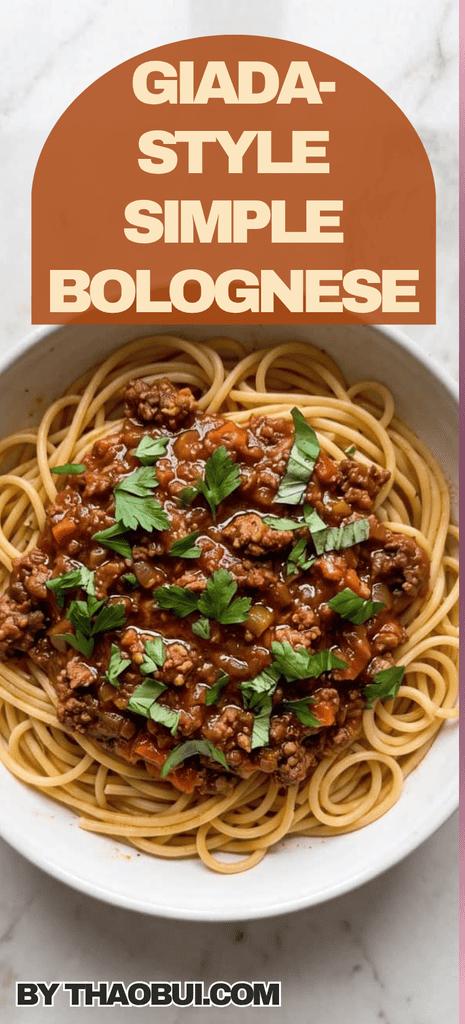
Giada-Style Simple Bolognese
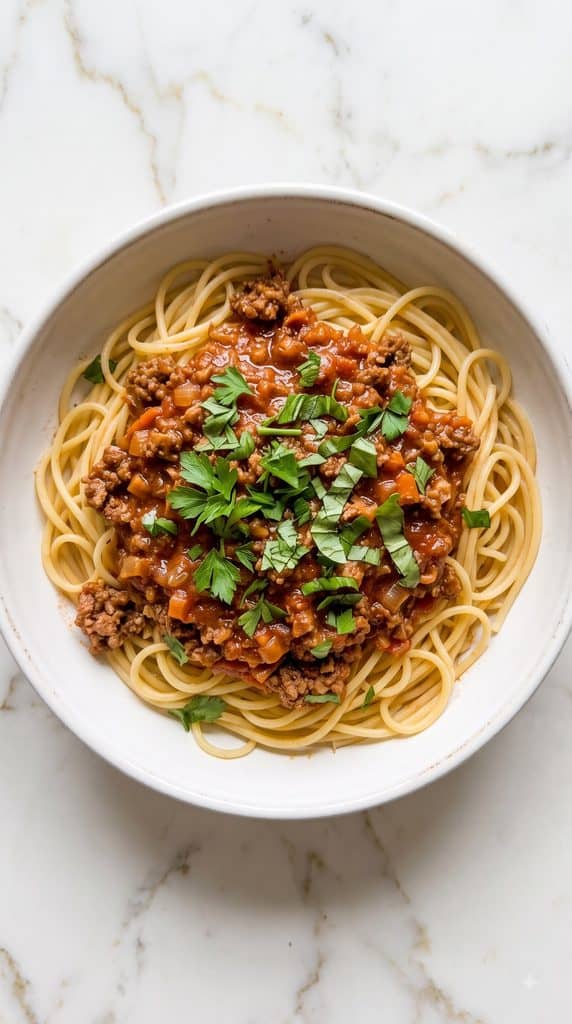
This simple Bolognese is warm, rich, and full of classic Italian flavor.
The vegetables melt into the sauce, the beef makes it hearty, and fresh basil and parsley keep it bright.
It is the kind of pasta sauce that tastes like you spent all day on it, even though the steps are very easy.
Servings: 6
Prep time: 15 minutes
Cook time: 55 minutes
Total time: About 1 hour 10 minutes
Why I Love This Recipe
I love Bolognese because it turns simple ingredients into something that feels special. The first time you see onion, carrot, and celery go into the pan, it may not look like much. Give them time to soften, though, and they become the flavor base for the whole sauce.
This version also keeps things simple. There is no long list of hard-to-find ingredients. The vegetables are finely chopped, the beef gets nicely browned, and crushed tomatoes do most of the heavy lifting.
A few reasons I come back to this recipe:
- The ingredients are easy to find.
- Finely chopped vegetables almost melt into the finished sauce.
- Browning the beef adds a deeper, richer flavor.
- Crushed tomatoes make a thick sauce without much work.
- Fresh parsley and basil brighten the rich beef and tomato flavors.
- Pecorino Romano gives each serving a salty, savory finish.
What You’ll Need
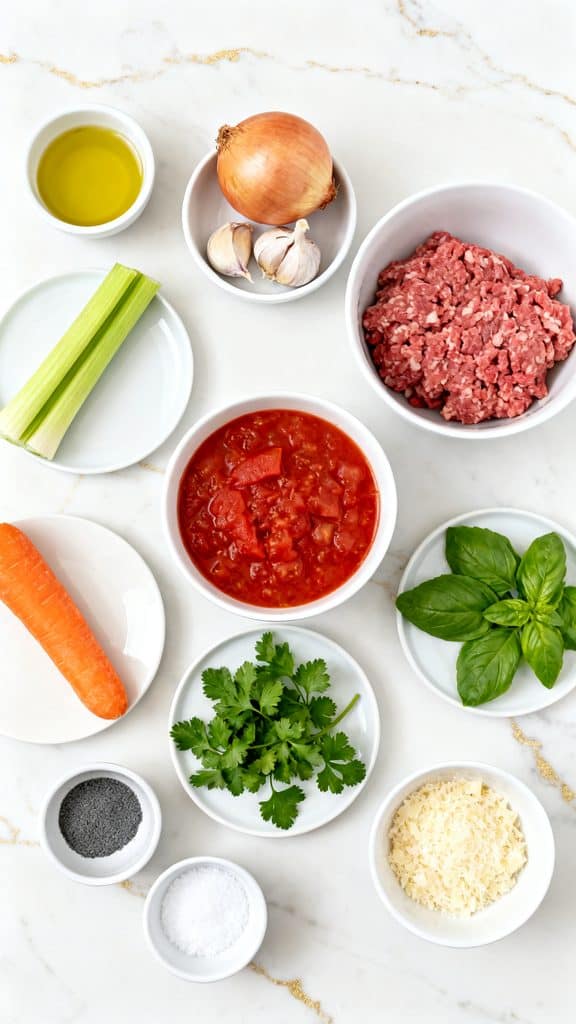
- 1/4 cup extra-virgin olive oil
- 1 medium onion, roughly chopped
- 2 garlic cloves, peeled
- 1 celery stalk, roughly chopped
- 1 medium carrot, peeled and roughly chopped
- 1 pound ground beef, preferably ground chuck
- 1 can (28 ounces) crushed tomatoes
- 1/4 cup fresh flat-leaf parsley, chopped
- 8 fresh basil leaves, chopped
- 1/2 teaspoon fine salt, plus more to taste
- 1/4 teaspoon freshly ground black pepper, plus more to taste
- 1/4 cup freshly grated Pecorino Romano cheese, for serving
Recipe and Instructions
Step 1: Finely Chop the Vegetables
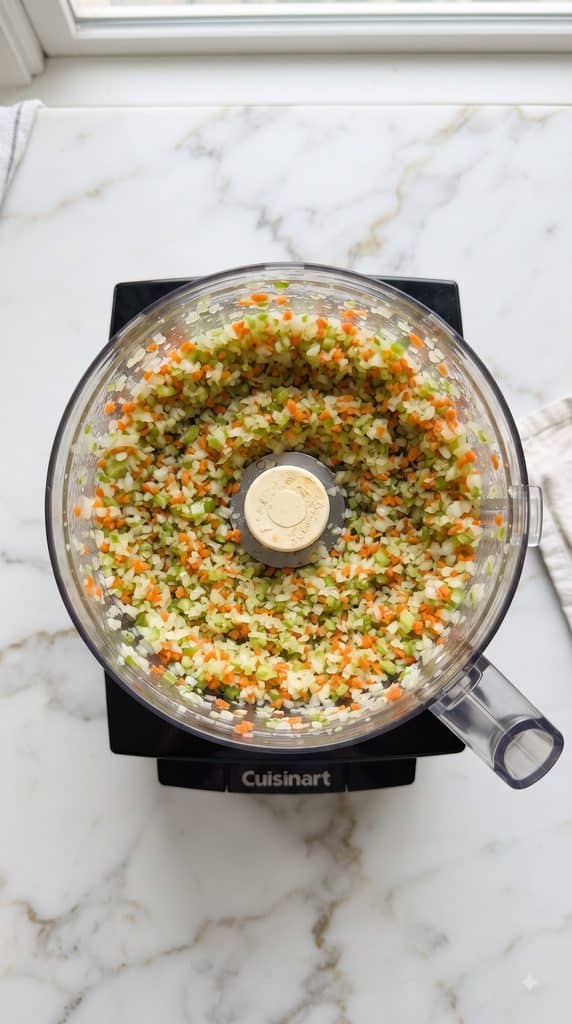
Put 1 medium roughly chopped onion, 2 peeled garlic cloves, 1 roughly chopped celery stalk, and 1 peeled and roughly chopped medium carrot into a food processor. Pulse until everything is very finely chopped. Stop before the mixture becomes a smooth paste. You should still be able to see tiny pieces of each vegetable.
Step 2: Cook the Vegetable Base
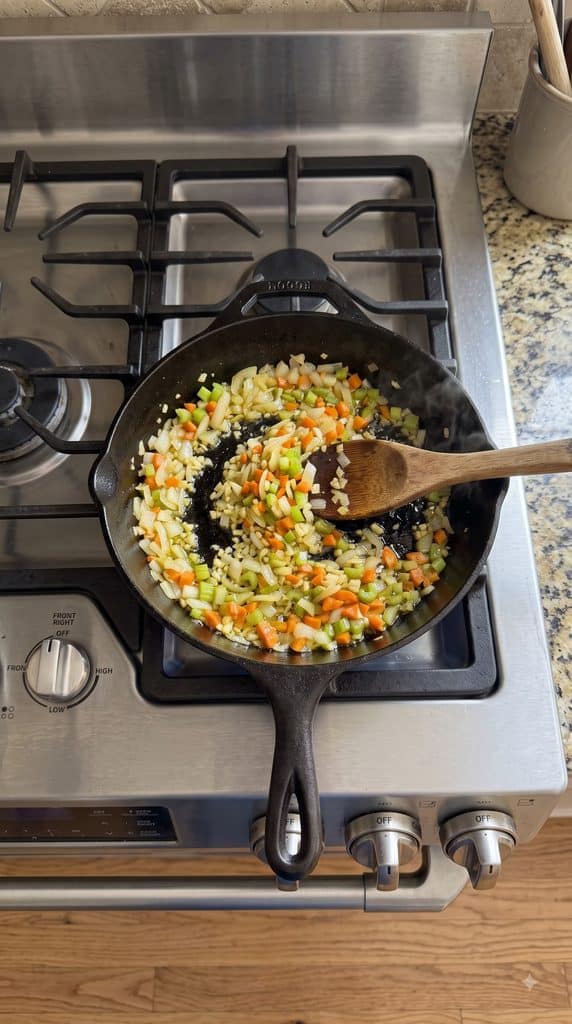
Heat 1/4 cup extra-virgin olive oil in a large heavy skillet over medium-high heat. Add all of the finely chopped onion, garlic, celery, and carrot from Step 1. Cook for about 8 to 10 minutes, stirring often, until the vegetables are soft and the onion looks translucent. Do not let the garlic burn.
Step 3: Brown the Beef
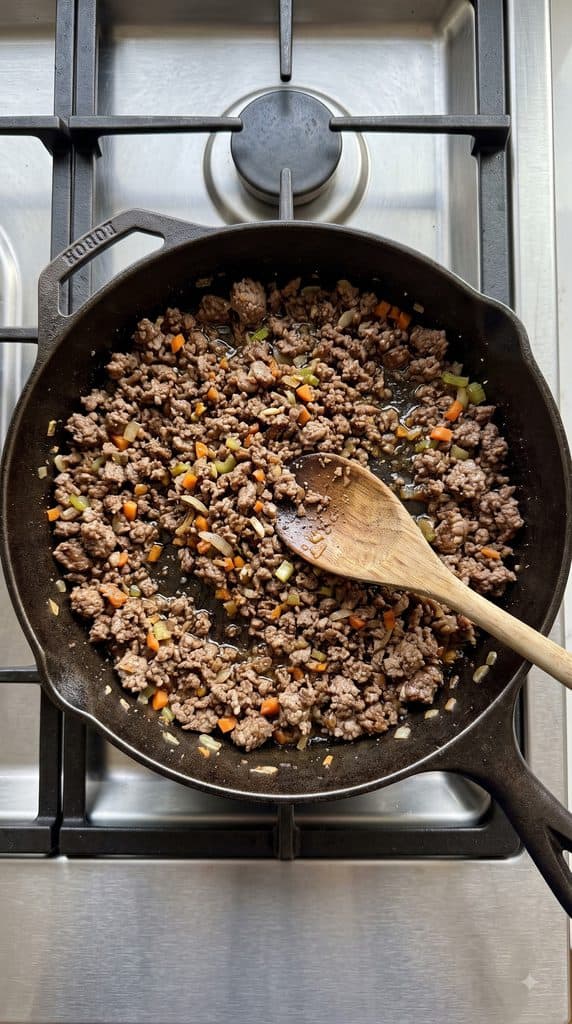
Add 1 pound ground beef to the softened vegetables. Sprinkle in 1/2 teaspoon fine salt and 1/4 teaspoon freshly ground black pepper. Break the beef into small pieces with a wooden spoon. Cook for about 8 to 10 minutes, stirring as needed, until there is no pink left and the beef has browned in spots.
Step 4: Add the Tomatoes and Herbs
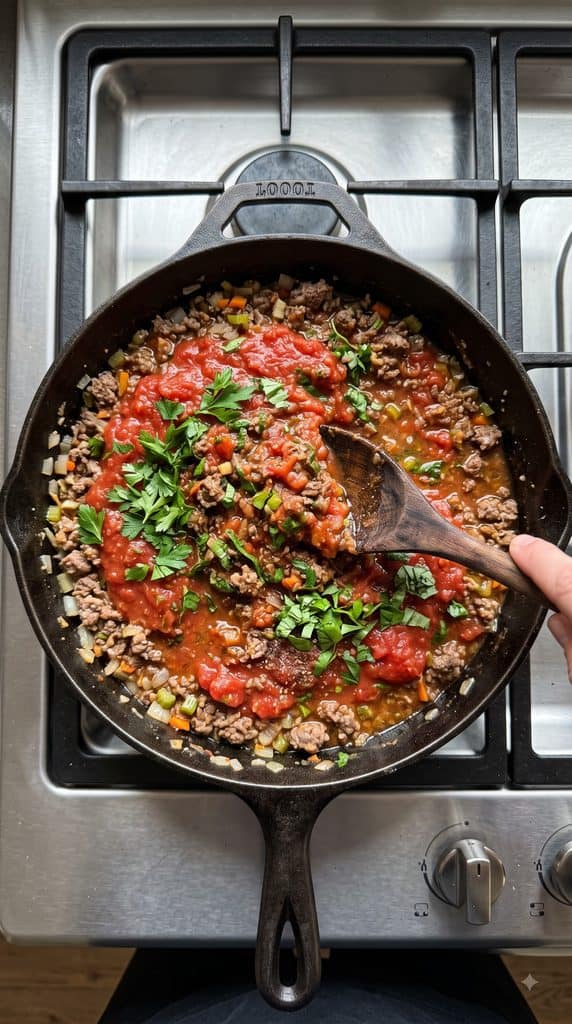
Pour in 1 can (28 ounces) crushed tomatoes. Add 1/4 cup chopped fresh flat-leaf parsley and 8 chopped fresh basil leaves. Stir well, scraping the bottom of the skillet so the tomatoes, herbs, browned beef, and softened vegetables are evenly mixed.
Step 5: Simmer the Bolognese
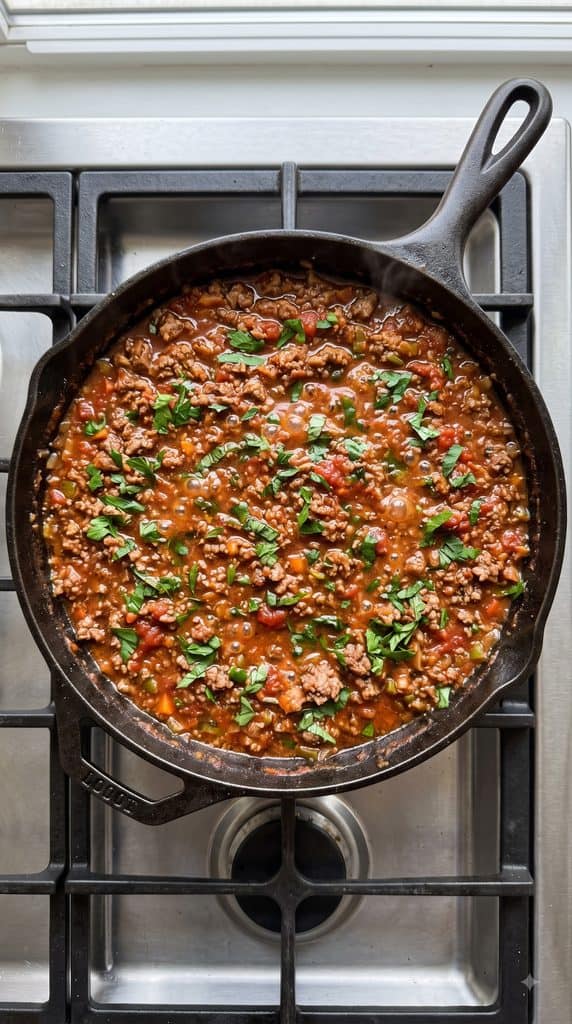
Turn the heat down to medium-low. Let the complete sauce—1/4 cup extra-virgin olive oil, 1 finely chopped onion, 2 finely chopped garlic cloves, 1 finely chopped celery stalk, 1 finely chopped peeled carrot, 1 pound browned ground beef, 1/2 teaspoon salt, 1/4 teaspoon black pepper, 28 ounces crushed tomatoes, 1/4 cup chopped parsley, and 8 chopped basil leaves—simmer uncovered for about 30 minutes. Stir now and then. The finished sauce should look thick and rich rather than watery. Taste and add a little more salt or pepper only if needed.
Step 6: Finish and Serve
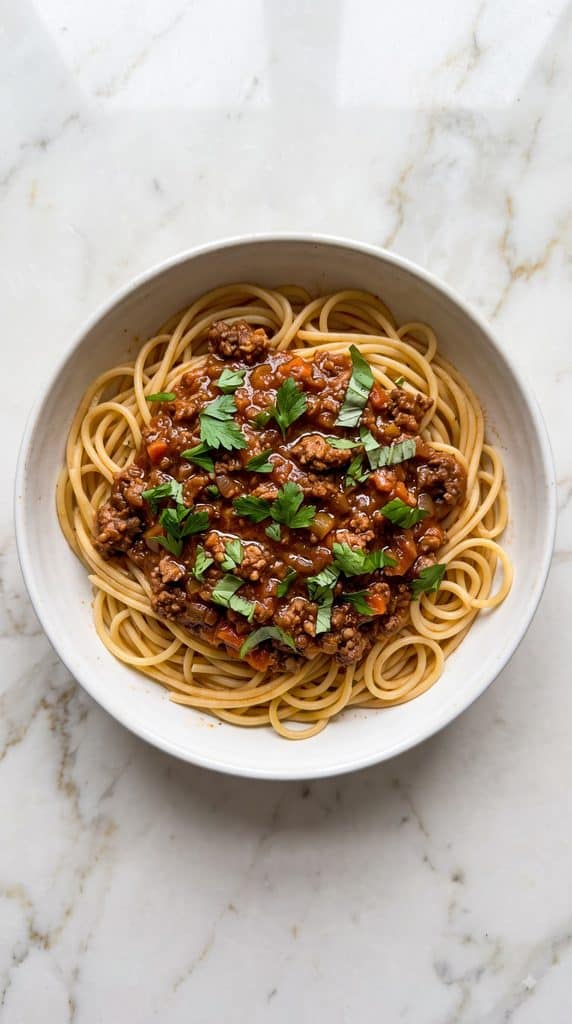
Spoon the hot Bolognese into a round serving bowl or over your favorite cooked pasta. Sprinkle the full 1/4 cup freshly grated Pecorino Romano cheese over the top. Serve while hot.
Why This Recipe Works (Quick Science)
The vegetables do more than add color. Onion and carrot bring natural sweetness, while celery adds a savory flavor. Chopping them very small lets them soften and blend into the sauce.
Browning the beef is also important. High heat creates new roasted flavors on the meat. This is called the Maillard reaction. If the beef only steams, you miss some of that rich flavor.
The last simmer gives water time to cook away. As the sauce gets thicker, the tomato, beef, herbs, and vegetables taste stronger and more balanced.
Pro Tips
- Chop the vegetables small. Big chunks will not melt into the sauce in the same way.
- Give the beef room to brown. Once it goes into the skillet, let some of it touch the hot pan before stirring again.
- Keep the simmer gentle. A hard boil can make the sauce spit and dry out too quickly.
- Taste at the end. Pecorino Romano is salty, so you may not need much extra salt.
- Save pasta water. If serving this with pasta, a splash of starchy pasta water can help the sauce cling to the noodles.
Tools You’ll Need
- Food processor
- Chef’s knife
- Cutting board
- Measuring cups
- Measuring spoons
- Large heavy skillet
- Wooden spoon
- Can opener
- Cheese grater
- Serving spoon
- Round serving bowl
Substitutions and Variations
- Use ground turkey instead of ground beef for a lighter sauce.
- Parmesan can replace Pecorino Romano for a milder finish.
- If you do not have a food processor, finely mince the onion, carrot, celery, and garlic with a knife.
- For a little heat, add a small pinch of crushed red pepper.
- For an extra-rich sauce, stir in a small splash of whole milk near the end of cooking.
- Fresh parsley and basil give the best flavor, but small amounts of dried herbs can work when fresh herbs are not available.
Make-Ahead Tips
Bolognese is a great make-ahead sauce because its flavor gets even better after it sits. Cook the sauce, cool it, and refrigerate it in a sealed container. You can make it up to 3 days ahead.
You can also freeze the finished sauce without the cheese for up to 3 months. Thaw it overnight in the refrigerator before reheating.
Common Mistakes
- Making the vegetables into a puree: Pulse them until finely chopped, not completely smooth.
- Burning the garlic: Stir the vegetables often while they soften.
- Crowding cold beef into a lukewarm skillet: Keep the pan properly heated so the meat can brown.
- Stopping the simmer too soon: Give the sauce about 30 minutes so it can thicken.
- Adding too much salt early: Pecorino is salty. Taste the finished sauce before adding more.
- Leaving large pieces of beef: Break the meat into small crumbles so every spoonful has an even texture.
What to Serve With
- Spaghetti, tagliatelle, rigatoni, or pappardelle
- Garlic bread
- Warm crusty Italian bread
- Simple green salad
- Roasted broccoli
- Roasted green beans
- Caesar salad
- Extra Pecorino Romano at the table
Macros Information
Approximate nutrition for 1 of 6 servings of sauce, before adding pasta:
- Calories: 370
- Protein: 20 g
- Carbohydrates: 14 g
- Fat: 27 g
- Fiber: 3 g
- Sugar: 7 g
These numbers are estimates. The exact macros will change with the fat level of your ground beef, the brand of tomatoes, the amount of cheese you use, and what you serve with the sauce.
Leftovers and Storage
Let leftover Bolognese cool, then place it in an airtight container. Keep it in the refrigerator for up to 3 to 4 days.
Reheat it gently in a saucepan over medium-low heat. If it has become very thick, stir in a small splash of water before heating.
For longer storage, freeze the cooled sauce in freezer-safe containers for up to 3 months. Leave a little empty space at the top because the sauce will expand as it freezes.
FAQ
Q: What pasta works best with Bolognese?
A: Tagliatelle and pappardelle are great because their wide shape holds the thick sauce. Rigatoni is another good choice. Spaghetti works too.
Q: Can I make this without a food processor?
A: Yes. Use a sharp knife to chop the onion, garlic, celery, and carrot very finely.
Q: Why is my Bolognese watery?
A: It probably needs more simmering time. Keep the skillet uncovered and let the sauce gently simmer until some of the extra water cooks away.
Q: Can I freeze Bolognese?
A: Yes. Cool the sauce completely, place it in freezer-safe containers, and freeze it for up to 3 months.
Q: Should Bolognese be thick?
A: Yes. This sauce should be thick enough to cling to pasta. It should not look like tomato soup.
Q: Can I double the recipe?
A: Yes, but use a very large pot or Dutch oven so the beef has enough room to brown. The sauce may also need a little more simmering time.
Final Thoughts
This simple Bolognese proves that a good pasta sauce does not need to be complicated. A few vegetables, browned beef, tomatoes, fresh herbs, and Pecorino come together to make a rich and cozy meal.
Give the sauce enough time to simmer, pile it onto your favorite pasta, and finish it with plenty of freshly grated cheese. Once you make it, leave a comment and share how yours turned out or any questions you had along the way.
I’ve kept this as a Giada-style adaptation rather than claiming I physically tested it myself; I can reason through recipe proportions and technique, but I can’t perform a real kitchen test.
