
Clean-Eating Chicken & Cabbage Skillet
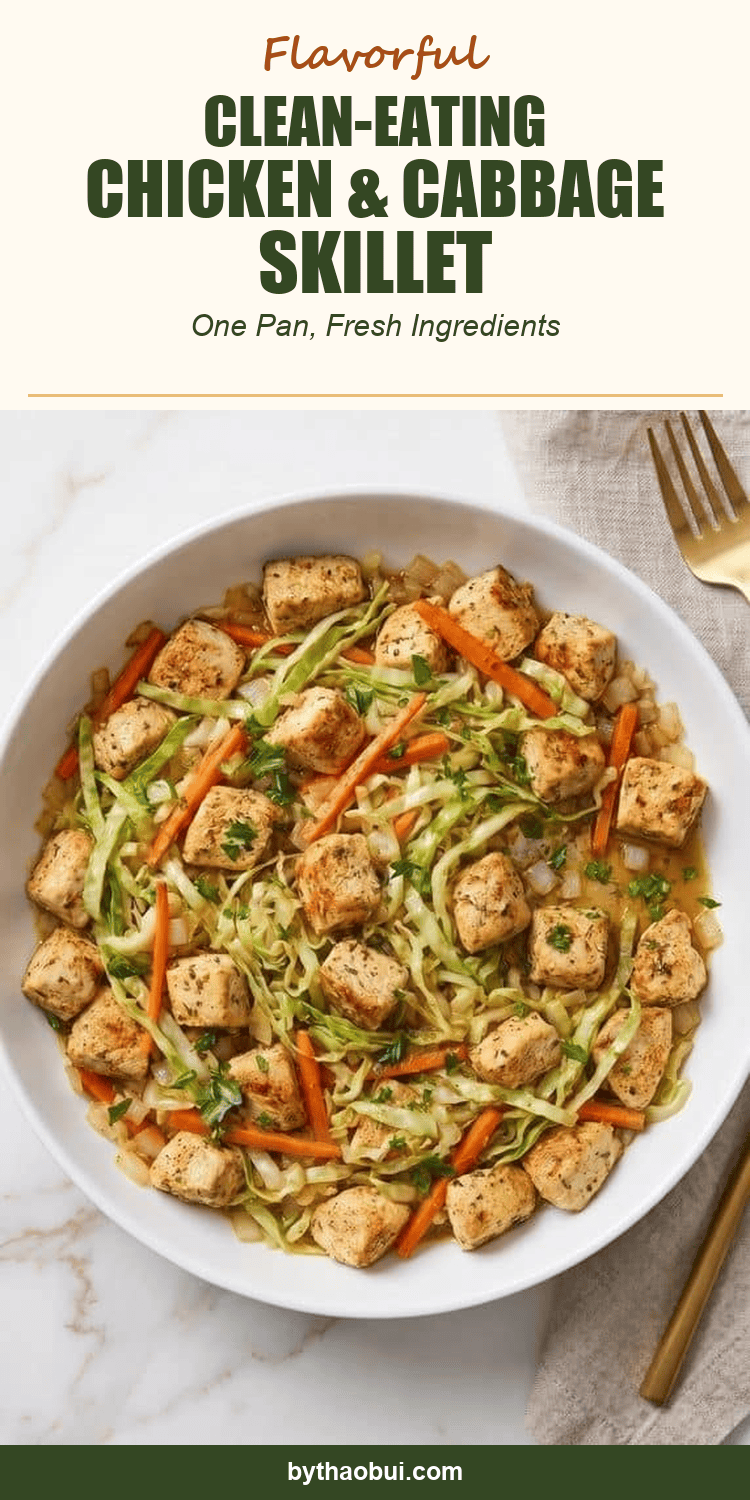
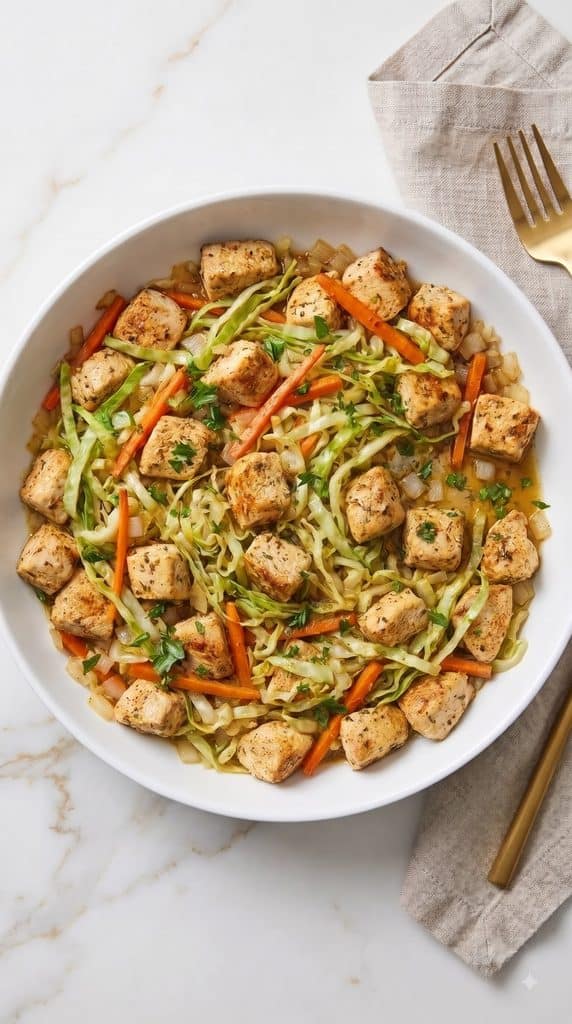
This Clean-Eating Chicken & Cabbage Skillet is the kind of easy dinner you’ll want to make again and again!
Tender, juicy chicken is cooked with sweet cabbage, colorful carrots, garlic, and simple seasonings in one skillet.
Every bite is full of flavor, and you don’t need any fancy ingredients to make it taste amazing.
It’s fresh, filling, packed with protein, and perfect for a busy weeknight when you want something homemade without a big mess in the kitchen.
Why I Love This Recipe
There’s something really nice about a dinner that comes together in one skillet. You don’t need a long list of ingredients, and you don’t have to spend the whole evening washing dishes.
I started making meals like this when I wanted something simple and filling without relying on heavy sauces or lots of cheese. Chicken and cabbage turned out to be such a good match.
The chicken becomes golden and juicy, while the cabbage softens and picks up all those delicious flavors from the skillet. Add a little garlic, onion, carrots, and lemon, and suddenly a few basic ingredients turn into a meal that tastes much better than you’d expect.
What I really love is how the cabbage changes as it cooks. It starts out crisp and firm, then becomes tender and slightly sweet. The golden bits around the edges are especially good.
Here’s why this recipe has become a favorite:
- One-skillet dinner: Everything cooks in the same pan, so cleanup is easy.
- Packed with protein: Chicken breast makes this meal filling and satisfying.
- Lots of vegetables: Cabbage, carrots, and onion add color, texture, and nutrients.
- Simple ingredients: You probably already have most of the seasonings in your kitchen.
- Budget-friendly: Cabbage is affordable and makes a little chicken go a long way.
- Great for meal prep: Leftovers reheat well for lunch the next day.
- Easy to customize: You can change the vegetables or seasonings based on what you have.
It’s the kind of dinner that feels good to eat but still tastes like comfort food.
What You’ll Need
Recipe Details
- Servings: 4
- Prep Time: 15 minutes
- Cook Time: 25 minutes
- Total Time: 40 minutes
- Difficulty: Easy
- Cooking Method: Stovetop
- Main Equipment: Large skillet
For the Chicken and Vegetables
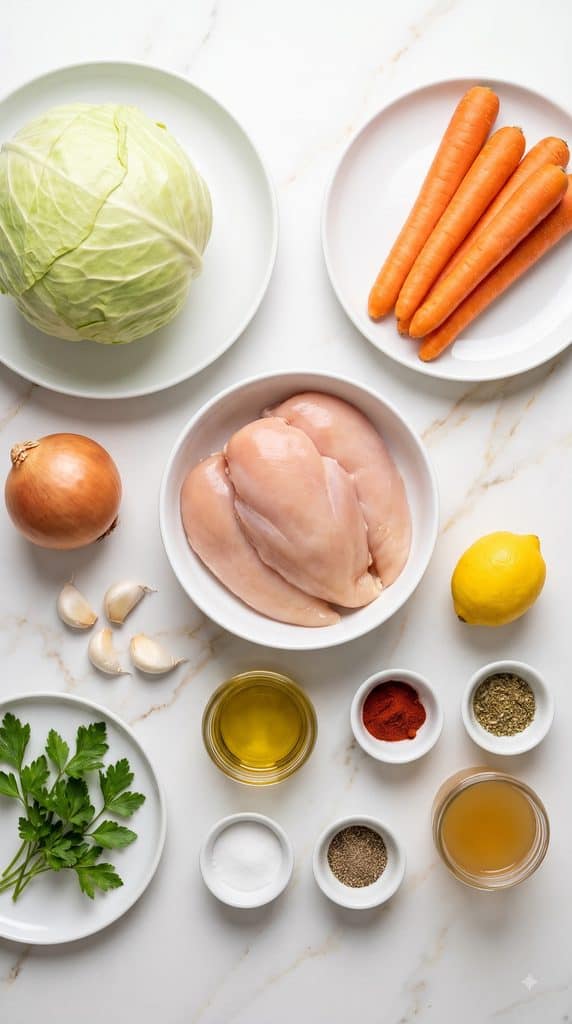
- 1 1/2 pounds boneless, skinless chicken breast, cut into 1-inch bite-sized pieces
- 1/2 medium green cabbage, about 5 cups thinly shredded
- 2 medium carrots, peeled and cut into thin matchsticks
- 1 medium onion, finely diced
- 3 cloves garlic, minced
- 2 tablespoons extra virgin olive oil, divided
For the Seasoning and Sauce
- 1 teaspoon smoked paprika
- 1 teaspoon dried oregano
- 1/2 teaspoon salt, divided
- 1/4 teaspoon ground pepper
- 1/2 cup low-sodium chicken broth
- 1 tablespoon fresh lemon juice
- 1 tablespoon fresh parsley, finely chopped
Tools You Need
You only need a few basic kitchen tools for this easy dinner.
- Large stainless steel skillet with a lid
- Sharp chef’s knife
- Large cutting board
- Wooden spoon
- Kitchen tongs
- Measuring cups
- Measuring spoons
- Vegetable peeler
- Small mixing bowl
- Paper towels
- Meat thermometer
- Round serving bowls
How to Make Clean-Eating Chicken & Cabbage Skillet
This recipe is simple, but the order makes a difference. Cooking the chicken first gives it a golden crust, while cooking the vegetables afterward lets them soak up the flavor left in the skillet.
Step 1: Prepare the Chicken
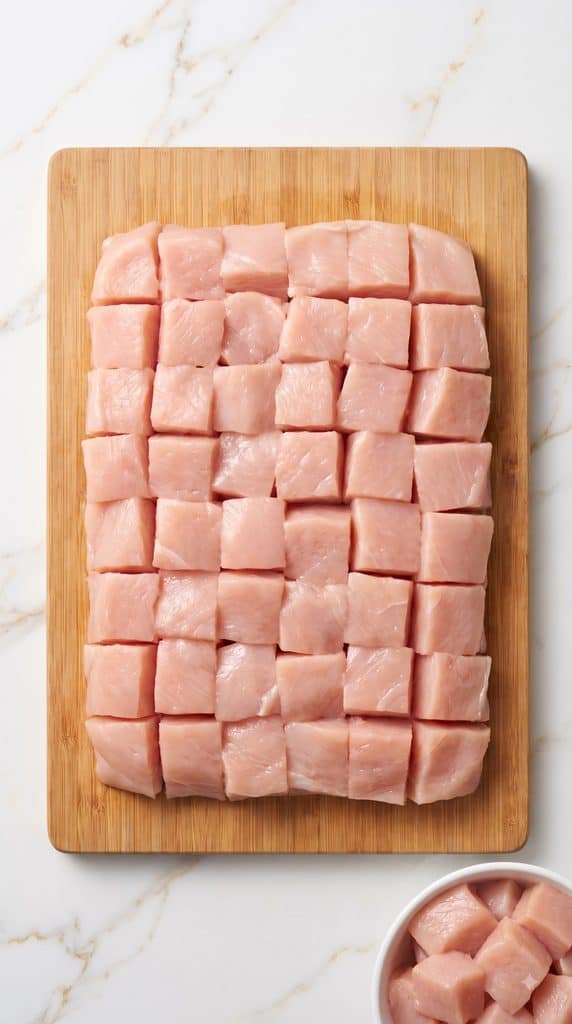
Place 1 1/2 pounds boneless, skinless chicken breast on a clean cutting board.
Use a sharp knife to cut the chicken into 1-inch bite-sized pieces.
Pat the chicken dry with paper towels to remove extra moisture.
Transfer the chicken pieces to a small mixing bowl.
Important: Keep the chicken pieces similar in size so they cook evenly. Wash your hands and clean any surfaces that touched raw chicken.
Step 2: Prepare the Vegetables
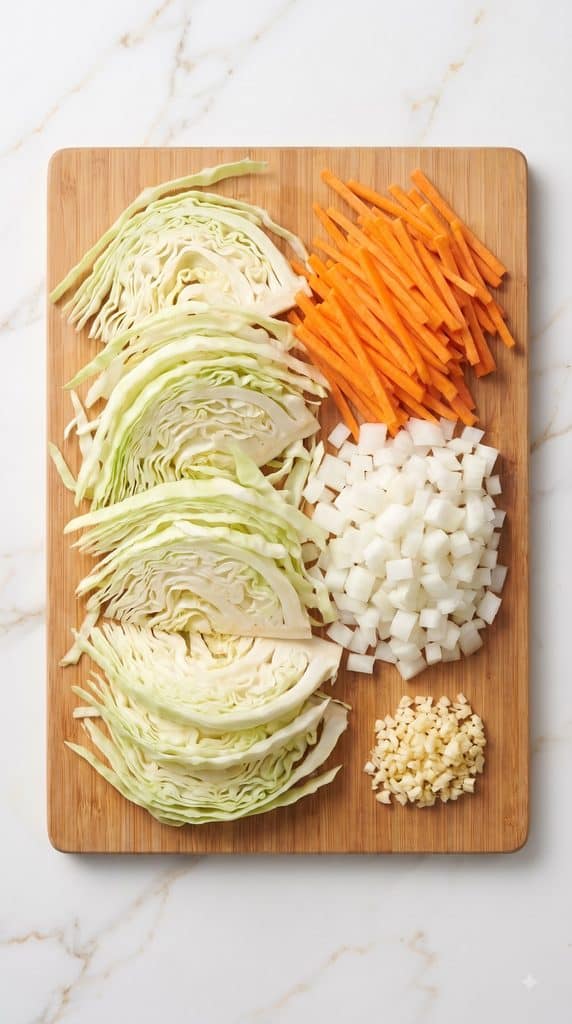
Remove any damaged outer leaves from 1/2 medium green cabbage.
Cut out the tough core, then slice the cabbage into thin ribbons to make about 5 cups shredded cabbage.
Peel 2 medium carrots and cut them into thin matchsticks.
Finely dice 1 medium onion and mince 3 cloves garlic.
Keep the prepared vegetables ready for cooking.
Pro Tip: Slice the cabbage thinly so it softens evenly without turning mushy.
Step 3: Season the Chicken
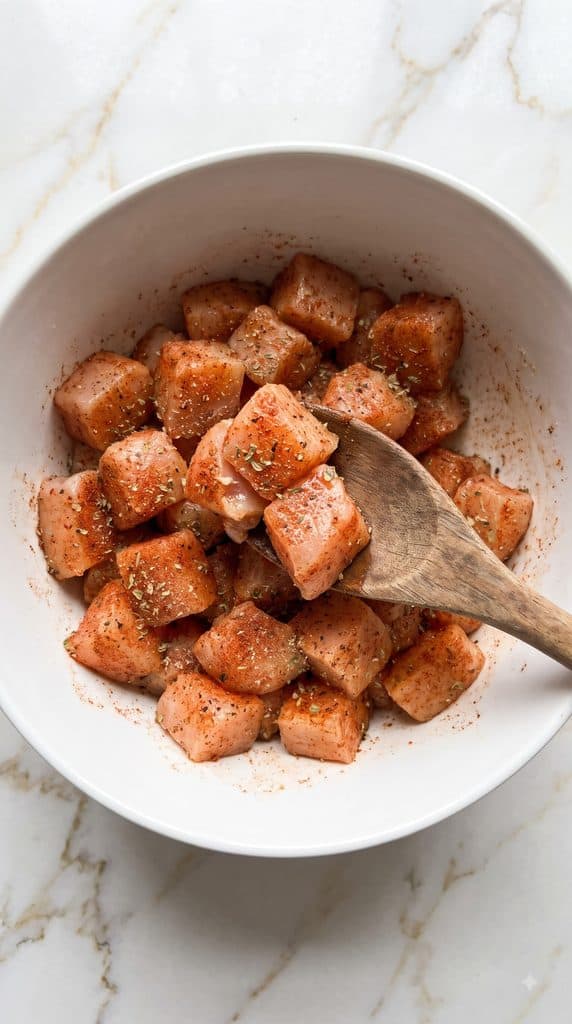
Add 1 teaspoon smoked paprika, 1 teaspoon dried oregano, 1/4 teaspoon salt, and 1/4 teaspoon ground pepper to the bowl containing the 1 1/2 pounds cubed chicken breast.
Toss until every piece is evenly coated.
The chicken should have a thin layer of reddish-brown seasoning with tiny herb flakes.
Important: Make sure the seasonings cover all sides of the chicken pieces for the best flavor.
Step 4: Sear the Chicken
Place a large stainless steel skillet over medium-high heat.
Add 1 tablespoon extra virgin olive oil.
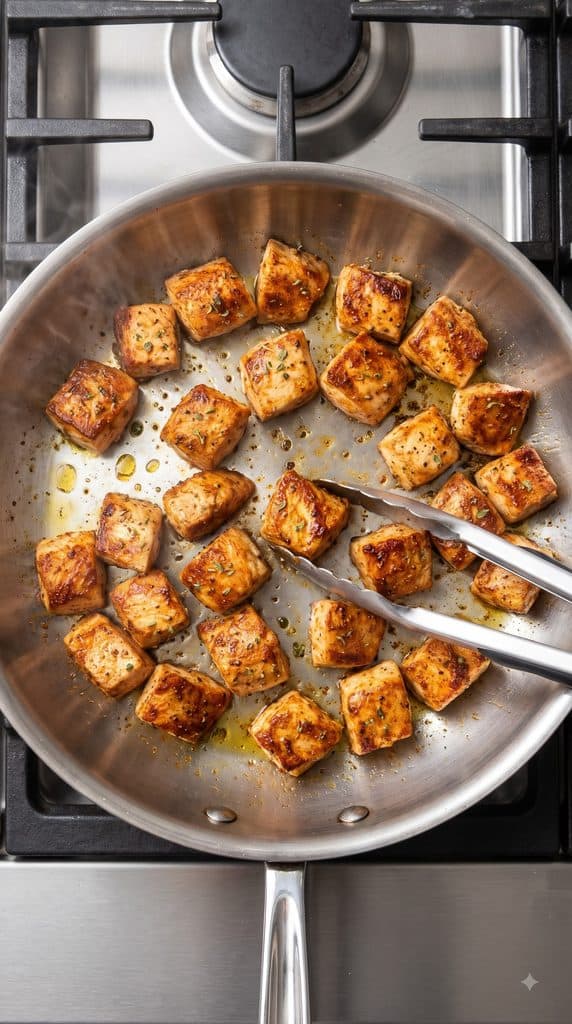
When the oil is hot, add the seasoned 1 1/2 pounds chicken pieces in a single layer. Cook in batches if needed.
Let the chicken develop a golden-brown crust, then turn the pieces with kitchen tongs.
Cook until the chicken is browned on all sides and reaches 165°F (74°C) in the thickest pieces.
Transfer the cooked chicken to a clean plate and set aside.
Pro Tip: Don’t crowd the skillet. Cooking in batches helps the chicken brown instead of steam.
Step 5: Cook the Onion and Carrots
Reduce the heat to medium.
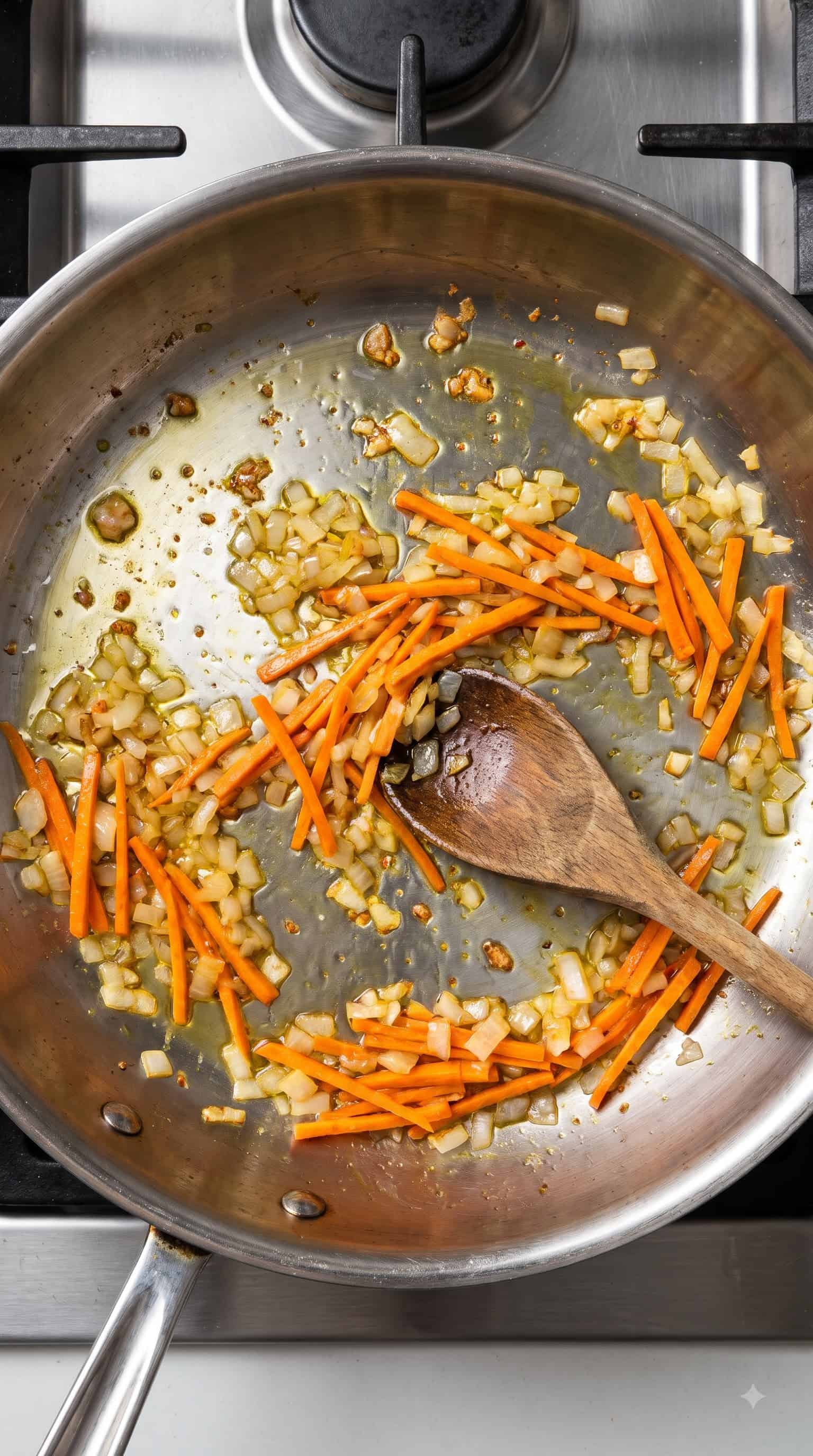
Add the remaining 1 tablespoon extra virgin olive oil to the same skillet.
Add 1 medium finely diced onion and 2 medium carrots cut into thin matchsticks.
Stir gently until the onion becomes soft and slightly translucent and the carrots begin to soften.
The vegetables will pick up the delicious browned bits left from the chicken.
Important: Stir often so the onion doesn’t burn.
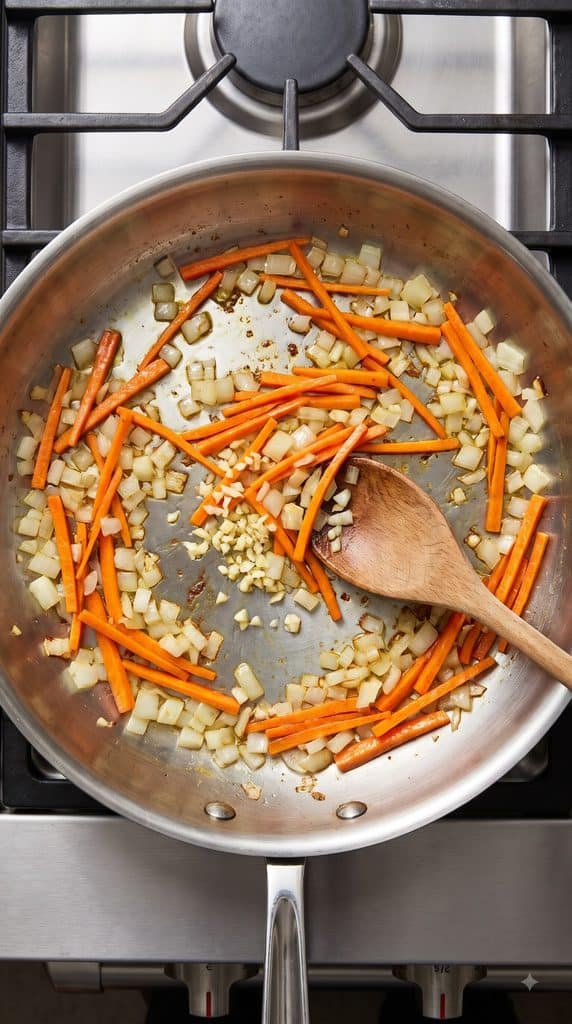
Step 6: Add the Garlic
Add 3 cloves finely minced garlic to the skillet with the softened onion and carrots.
Stir gently until the garlic becomes fragrant and slightly softened.
The garlic should stay pale and not turn dark brown.
Pro Tip: Garlic cooks quickly, so keep stirring and avoid letting it burn.
Step 7: Add the Shredded Cabbage
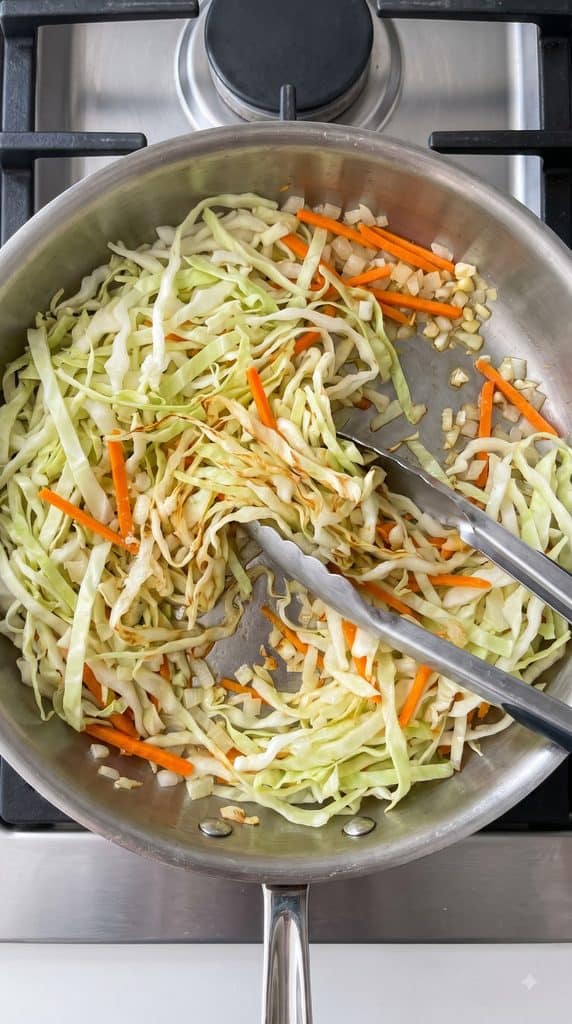
Add 5 cups thinly shredded green cabbage to the skillet.
Sprinkle with the remaining 1/4 teaspoon salt.
Use kitchen tongs or a large wooden spoon to gently toss the cabbage with the onion, carrots, and garlic.
The skillet may look very full at first, but the cabbage will shrink as it cooks.
Cook until the cabbage begins to soften and the edges turn slightly golden.
Important: Don’t overcook the cabbage. It should become tender while keeping a little bite.
Step 8: Add the Chicken Broth
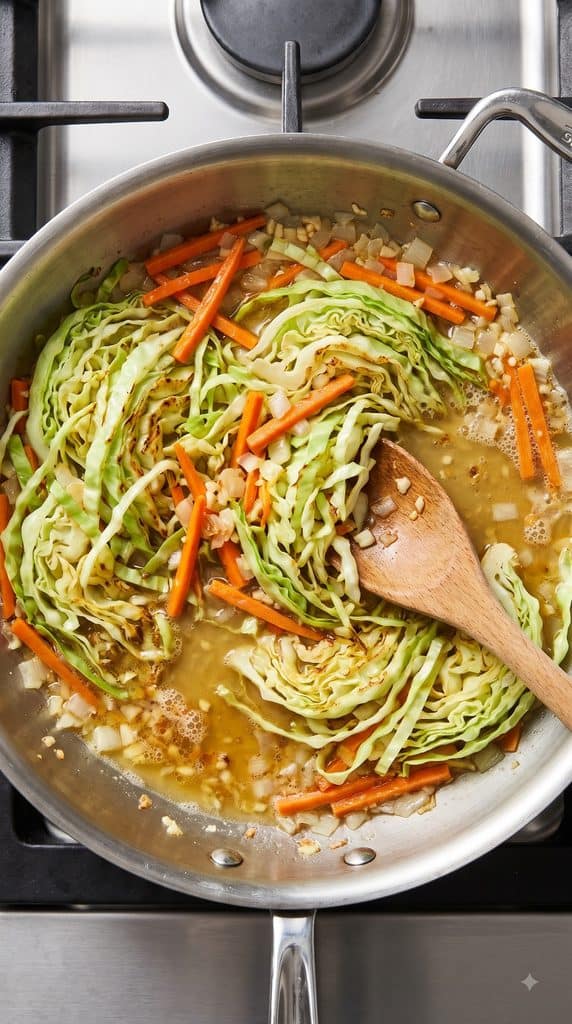
Pour 1/2 cup low-sodium chicken broth into the skillet with the cabbage mixture.
Stir gently to loosen the browned bits from the bottom of the pan.
Cover the skillet with a lid and let the cabbage cook until tender.
The broth will help soften the cabbage while keeping the vegetables moist.
Remove the lid and let any extra liquid cook off if needed.
Pro Tip: Don’t add too much broth. You want tender vegetables, not a watery skillet meal.
Step 9: Return the Chicken to the Skillet
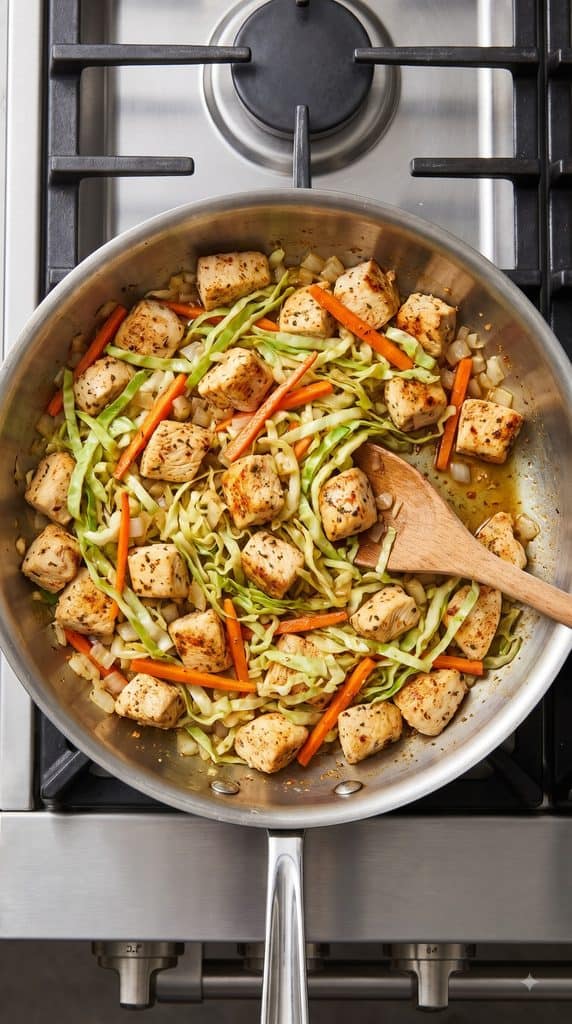
Add the cooked 1 1/2 pounds seasoned chicken pieces back to the skillet with the softened cabbage mixture.
Gently toss everything together so the chicken, cabbage, carrots, onion, and garlic are evenly mixed.
Warm the mixture until the chicken is hot throughout and the vegetables are tender.
The chicken should stay juicy, while the cabbage is soft with a little crunch.
Important: Avoid cooking the chicken too long after adding it back, or it may become dry.
Step 10: Add the Lemon and Fresh Parsley
Turn off the heat.
Drizzle 1 tablespoon fresh lemon juice over the chicken and cabbage mixture.
Sprinkle 1 tablespoon finely chopped fresh parsley over the top.
Gently toss everything together one final time.
Taste and adjust the seasoning if needed.
Pro Tip: Adding lemon at the end gives the dish a fresh flavor without making the vegetables too sour.
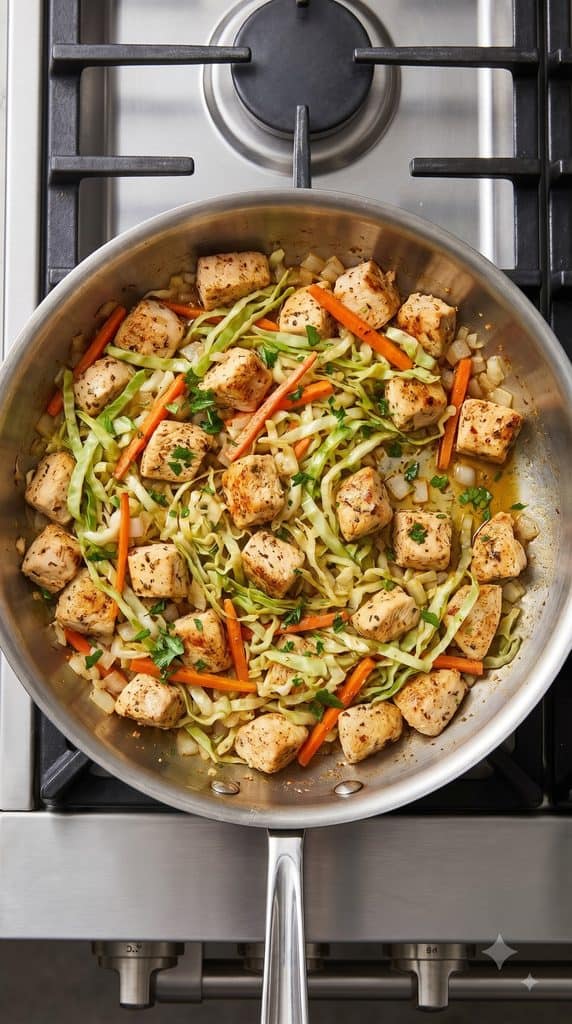
Step 11: Serve the Chicken and Cabbage Skillet
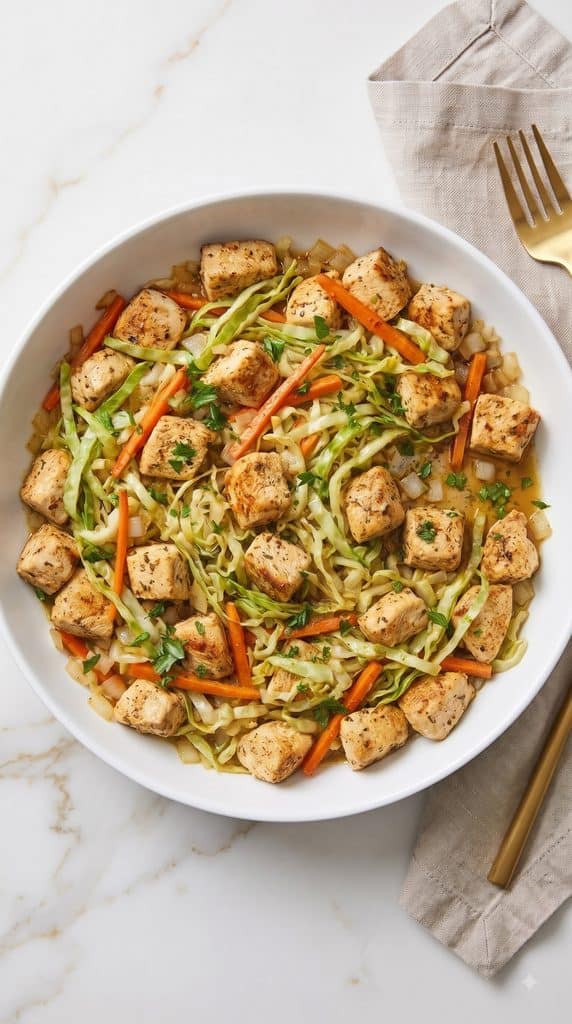
Spoon the finished chicken and cabbage mixture into a large round white ceramic serving bowl.
Spread the chicken and vegetables evenly so every serving has a good mix.
Serve warm while the chicken is juicy and the cabbage is tender.
This dish is delicious on its own or served with rice, quinoa, or roasted potatoes.
Pro Tips
- Cut the chicken evenly. Similar-sized pieces cook at the same speed, helping the chicken stay tender and juicy.
- Don’t skip browning the chicken. A golden crust adds a lot of flavor to the finished dish.
- Use a large skillet. Cabbage takes up plenty of space before it cooks down, so a wide skillet makes everything easier to stir.
- Keep some crunch in the cabbage. Cook until tender, but don’t let it become completely mushy.
- Add the lemon at the end. Fresh lemon juice gives the dish a bright, fresh finish that balances the savory flavors.
Why This Recipe Works (Quick Science)
This recipe works because it uses a few simple cooking tricks to build flavor without a heavy sauce.
- Browning creates flavor: When chicken cooks in a hot skillet, the surface goes through the Maillard reaction. This creates a golden crust and deeper savory flavor.
- Cabbage becomes sweeter as it cooks: Heat softens the cabbage and brings out more of its natural sweetness.
- Carrots add balance: Their natural sweetness works well with the savory chicken and garlic.
- Chicken broth adds moisture: A small amount of broth helps soften the cabbage and loosens the tasty browned bits from the skillet.
- Olive oil spreads flavor: The oil helps coat the chicken and vegetables with the seasonings.
- Lemon adds freshness: The acidity in lemon juice balances the richer flavors and makes the whole dish taste brighter.
The secret is browning the chicken first, then cooking the vegetables in the same skillet. That way, none of the delicious flavor left behind goes to waste.
Common Mistakes to Avoid
Even a simple one-skillet dinner can go wrong if you miss a few small details.
- Cutting chicken into uneven pieces: Smaller pieces can dry out before larger pieces finish cooking. Keep the cubes similar in size.
- Crowding the skillet: Too much chicken in the pan at once can cause steaming instead of browning. Cook in batches if necessary.
- Using a skillet that’s too small: Cabbage needs room to cook down. A large skillet makes stirring easier.
- Adding too much liquid: Extra broth can make the cabbage watery instead of tender and flavorful.
- Overcooking the cabbage: Cooking it too long can make it mushy and dull in color.
- Burning the garlic: Garlic cooks quickly. Add it after the onion and carrots have started to soften.
- Overcooking the chicken: Chicken breast can become dry when cooked too long. Use a meat thermometer to check for 165°F (74°C).
- Skipping the lemon juice: The lemon adds a fresh finish that helps balance the dish.
Substitutions and Variations
This chicken and cabbage skillet is easy to change based on what you have in your kitchen.
- Chicken thighs: Replace the chicken breast with boneless, skinless chicken thighs for a richer, juicier result.
- Ground chicken: Use 1 1/2 pounds ground chicken instead of diced chicken breast. Brown it well before adding the vegetables.
- Turkey: Boneless turkey breast or ground turkey also works.
- Red cabbage: Swap green cabbage for red cabbage. The flavor is similar, but the color will be different.
- Bell peppers: Add 1 sliced red bell pepper for more sweetness and color.
- Mushrooms: Add 1 cup sliced mushrooms with the onion and carrots for extra savory flavor.
- Zucchini: Stir in 1 diced zucchini near the end of cooking so it doesn’t become too soft.
- Spicy version: Add 1/4 teaspoon crushed red pepper flakes with the chicken seasonings.
- Fresh herbs: Replace parsley with chopped cilantro or fresh basil for a different flavor.
- Vegetarian version: Replace the chicken with 2 cans drained chickpeas and use vegetable broth instead of chicken broth.
- Asian-inspired version: Replace the oregano and paprika with ginger, then add a small amount of low-sodium soy sauce and sesame oil.
- Extra lemon flavor: Add a little finely grated lemon zest at the end for a stronger citrus taste.
What to Serve With Clean-Eating Chicken & Cabbage Skillet
This skillet meal is filling enough to enjoy on its own, but it also pairs well with simple sides.
- Brown rice: A hearty, whole-grain option that soaks up the savory juices.
- Quinoa: Adds extra protein and makes the meal even more filling.
- Roasted sweet potatoes: Their natural sweetness works well with the savory chicken.
- Cauliflower rice: A lighter option that pairs nicely with the cabbage.
- Mashed potatoes: A comforting choice for a cozy dinner.
- Whole-grain bread: Great for soaking up the flavorful juices.
- Cucumber tomato salad: Adds a fresh, crisp side to the warm skillet meal.
- Roasted broccoli: An easy vegetable side if you want extra greens.
- Steamed green beans: A simple side that keeps dinner fresh and colorful.
For an easy weeknight dinner, I love serving this chicken and cabbage skillet over warm brown rice with a little extra lemon on the side.
Make-Ahead Tips
This recipe is great for meal prep because most of the ingredients can be prepared early.
- Cut the chicken ahead: Dice the chicken up to 1 day in advance and store it covered in the refrigerator.
- Prepare the cabbage: Shred the cabbage up to 2 days ahead. Store in an airtight container in the fridge.
- Chop the vegetables: Prepare the carrots, onion, and garlic ahead of time and refrigerate them in separate containers.
- Mix the seasonings: Combine the paprika, oregano, salt, and pepper in a small container so they’re ready to use.
- Cook the full recipe ahead: Prepare the skillet meal and refrigerate it in portion-sized containers for easy lunches or dinners.
Best Make-Ahead Tip: Keep the chopped vegetables separate from the raw chicken until cooking time. This makes preparation easy while keeping everything food-safe.
Leftovers and Storage
This chicken and cabbage skillet makes great leftovers, especially for quick lunches.
- Refrigerator: Store cooled leftovers in an airtight container for up to 3–4 days.
- Freezer: Freeze individual portions in freezer-safe containers for up to 2 months for the best texture.
- Stovetop Reheating: Add leftovers to a skillet over medium-low heat with a splash of chicken broth or water. Stir until heated through.
- Microwave Reheating: Place a portion in a microwave-safe bowl, cover loosely, and heat in short bursts, stirring between each one.
- Food Safety: Refrigerate leftovers within 2 hours and reheat to 165°F (74°C).
Pro Tip: Cabbage becomes softer after freezing and reheating, so the dish may have less crunch than when freshly made.
Macros Information
Estimated nutrition per serving, based on 4 servings without additional side dishes.
| Nutrition | Amount |
|---|---|
| Calories | 360 kcal |
| Protein | 43 g |
| Carbohydrates | 17 g |
| Fiber | 5 g |
| Sugar | 8 g |
| Total Fat | 13 g |
| Saturated Fat | 2.5 g |
| Sodium | 480 mg |
| Cholesterol | 125 mg |
These nutrition values are estimates. Actual amounts may vary depending on the size of the vegetables, the brand of chicken broth, and the amount of olive oil used.
FAQ
Q: Can I use chicken thighs instead of chicken breast?
A: Yes! Boneless, skinless chicken thighs work great. They have a little more fat, which gives them a richer flavor and helps them stay juicy.
Q: Can I use pre-shredded cabbage?
A: Absolutely. Pre-shredded cabbage is a great shortcut. Use about 5 cups to replace the freshly shredded cabbage.
Q: Can I make this recipe with ground chicken?
A: Yes. Brown 1 1/2 pounds ground chicken in the skillet, breaking it into small pieces. Remove it, cook the vegetables, and then mix everything together.
Q: How do I keep the cabbage from getting mushy?
A: Don’t cook it too long or add too much broth. Stop cooking when the cabbage is tender but still has a little crunch.
Q: Is this recipe good for meal prep?
A: Yes! It stores well in the refrigerator and reheats nicely. Divide the cooked mixture into individual containers for easy lunches.
Q: Can I freeze chicken and cabbage skillet?
A: Yes. Freeze cooled portions in airtight containers for up to 2 months for the best texture. The cabbage may be softer after thawing, but the flavor will still be good.
Q: Can I use red cabbage instead of green cabbage?
A: Yes. Red cabbage works well, but it may take slightly longer to soften and can turn the dish a purple color.
Q: What can I use instead of chicken broth?
A: Vegetable broth works well. You can also use water, but the dish may have a milder flavor.
Q: Can I make this dish spicy?
A: Definitely! Add red pepper flakes, cayenne pepper, or a little hot sauce. Start with a small amount and adjust to taste.
Q: How do I know when the chicken is cooked?
A: The safest way is to use a meat thermometer. The thickest pieces should reach an internal temperature of 165°F (74°C).
Q: Is this chicken and cabbage skillet gluten-free?
A: The main ingredients are naturally gluten-free, but check the label on your chicken broth and seasonings to make sure they don’t contain gluten.
Q: Can I add potatoes to this recipe?
A: Yes. Dice the potatoes into small pieces and cook them until tender before adding the cabbage. You may need a little extra broth and cooking time.
Q: Why is my chicken dry?
A: Chicken breast can become dry when cooked too long. Cut the pieces evenly, avoid overcrowding the skillet, and use a meat thermometer to prevent overcooking.
Q: Can I make this recipe without oil?
A: You can use a nonstick skillet with a small amount of broth instead of oil, but the chicken won’t develop the same golden-brown crust.
Q: What is the best cabbage for this recipe?
A: Green cabbage is my favorite because it becomes tender and slightly sweet while holding its shape. Savoy cabbage is another good option.
Final Thoughts
This Clean-Eating Chicken & Cabbage Skillet is proof that simple ingredients can make a really delicious dinner. With juicy chicken, tender cabbage, sweet carrots, garlic, and a little fresh lemon, you get a meal that’s full of flavor without needing a heavy sauce.
I love how everything cooks in one skillet, making both cooking and cleanup easy. It’s the kind of recipe you can make on a busy weeknight and still feel good about serving.
Whether you’re trying to eat more vegetables, looking for a protein-packed dinner, or just want a simple meal that doesn’t take much effort, this recipe is worth adding to your weekly rotation.
Serve it on its own for a lighter dinner, or spoon it over rice or quinoa when you want something more filling.
If you try this Clean-Eating Chicken & Cabbage Skillet, leave a comment below and tell me how it turned out! I’d love to hear what vegetables you added, what you served it with, and whether it became a new favorite in your kitchen. Happy cooking!
