
Chickpea Pasta Soup
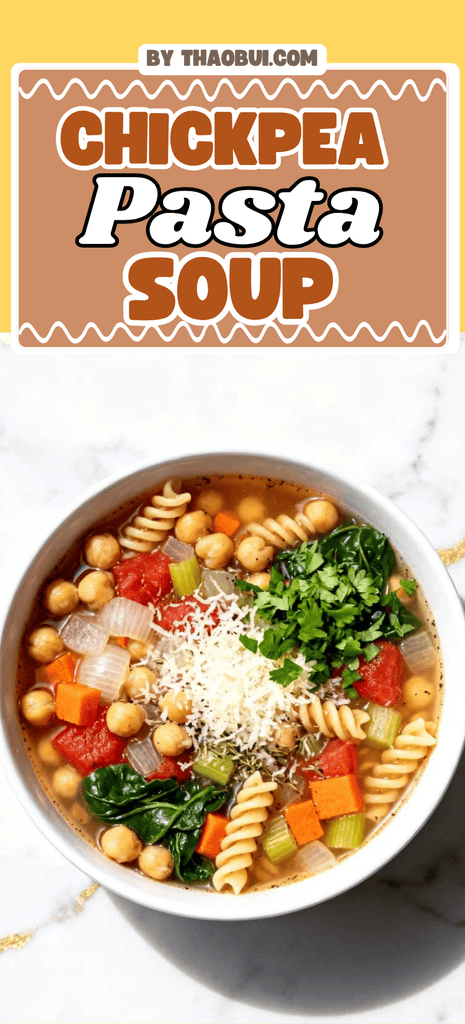
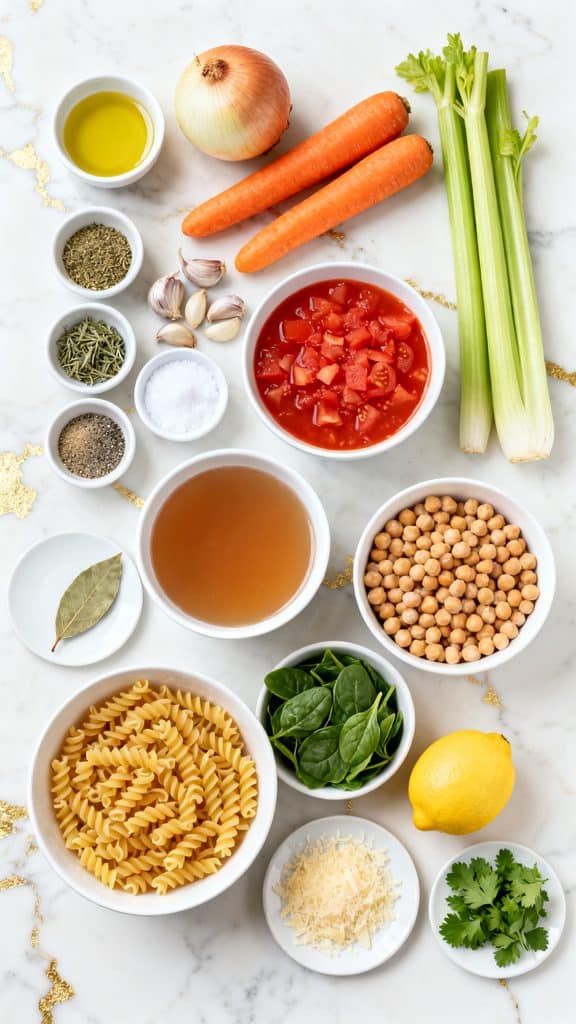
This Chickpea Pasta Soup is warm, cozy, and full of simple pantry foods.
Tender chickpeas, little pasta, vegetables, tomatoes, and herbs cook in one pot to make a thick, hearty soup.
It is easy enough for a weeknight but tastes like it has been simmering all day.
servings
Prep time: 15 minutes
Cook time: 30 minutes
Total time: 45 minutes
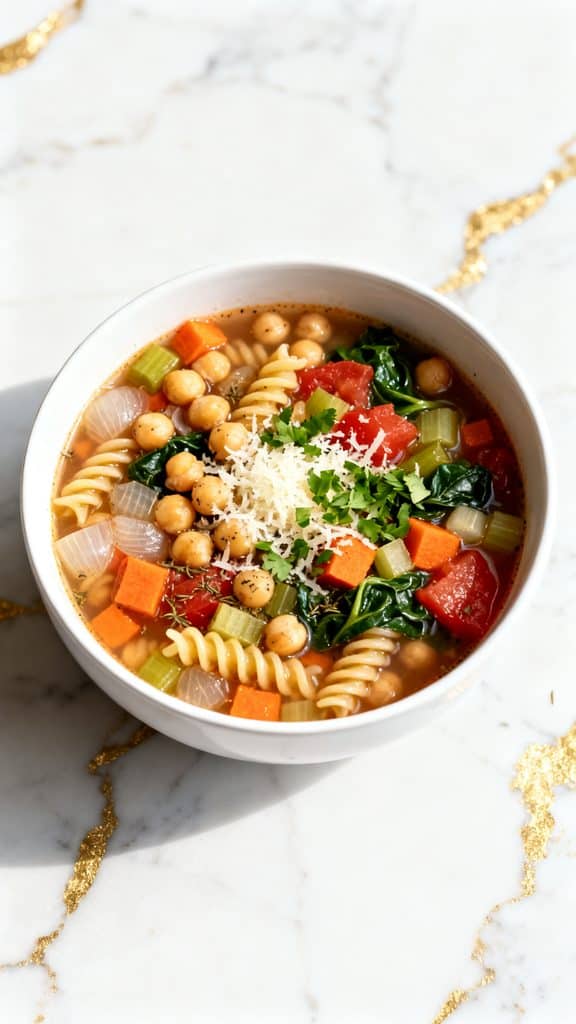
What You’ll Need
- 2 tablespoons olive oil
- 1 medium onion, diced
- 2 medium carrots, diced
- 2 celery stalks, diced
- 4 garlic cloves, minced
- 1 teaspoon Italian seasoning
- ½ teaspoon dried thyme
- ½ teaspoon fine salt
- ¼ teaspoon black pepper
- 1 can (14.5 ounces) diced tomatoes, with juices
- 6 cups low-sodium vegetable broth
- 2 cans (15 ounces each) chickpeas, drained and rinsed
- 1 bay leaf
- 1½ cups dry ditalini pasta
- 2 packed cups baby spinach, roughly chopped
- 1 tablespoon fresh lemon juice
- 2 tablespoons finely grated Parmesan cheese
- 1 tablespoon chopped fresh parsley
Recipe and Instructions
Step 1: Prep the Vegetables
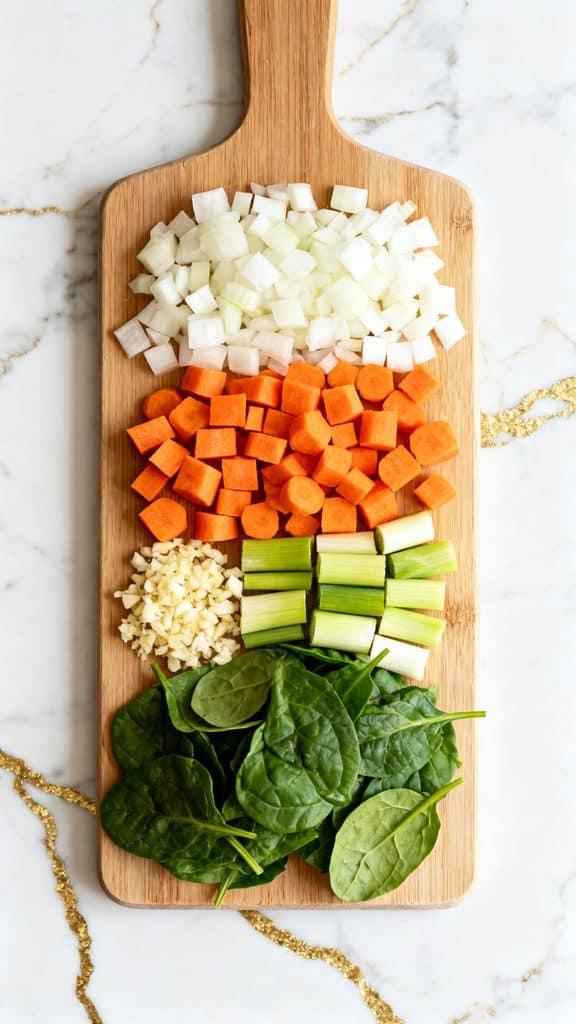
Dice 1 medium onion, dice 2 medium carrots, dice 2 celery stalks, mince 4 garlic cloves, and roughly chop 2 packed cups baby spinach. Keep each ingredient in its own small pile so everything is ready for the pot.
Step 2: Cook the Vegetables
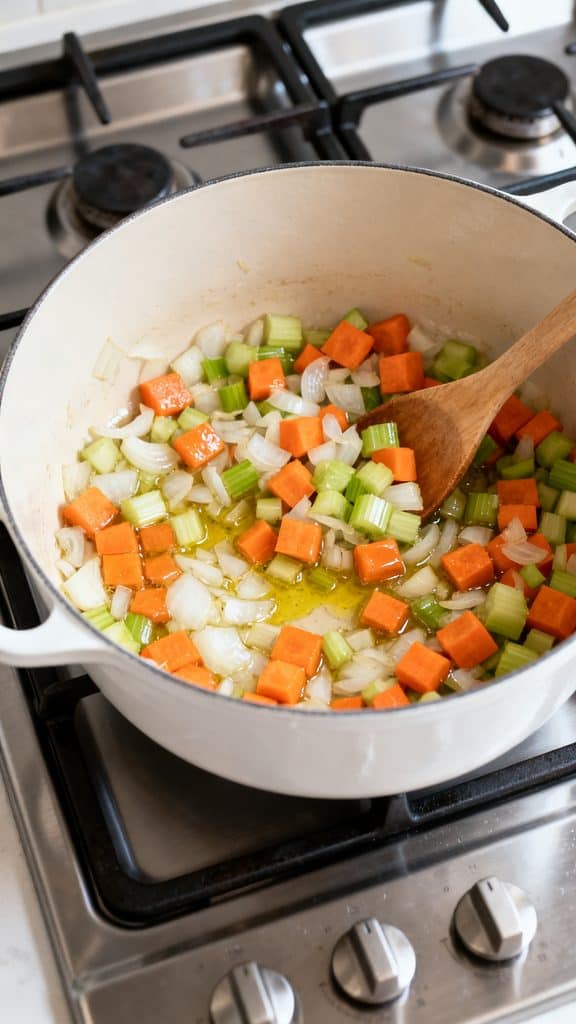
Place a large Dutch oven over medium heat. Add 2 tablespoons olive oil, then add the 1 diced medium onion, 2 diced medium carrots, and 2 diced celery stalks from Step 1. Cook for 6 to 7 minutes, stirring now and then, until the onion is soft and the carrots and celery have started to soften.
Step 3: Add the Garlic and Seasonings
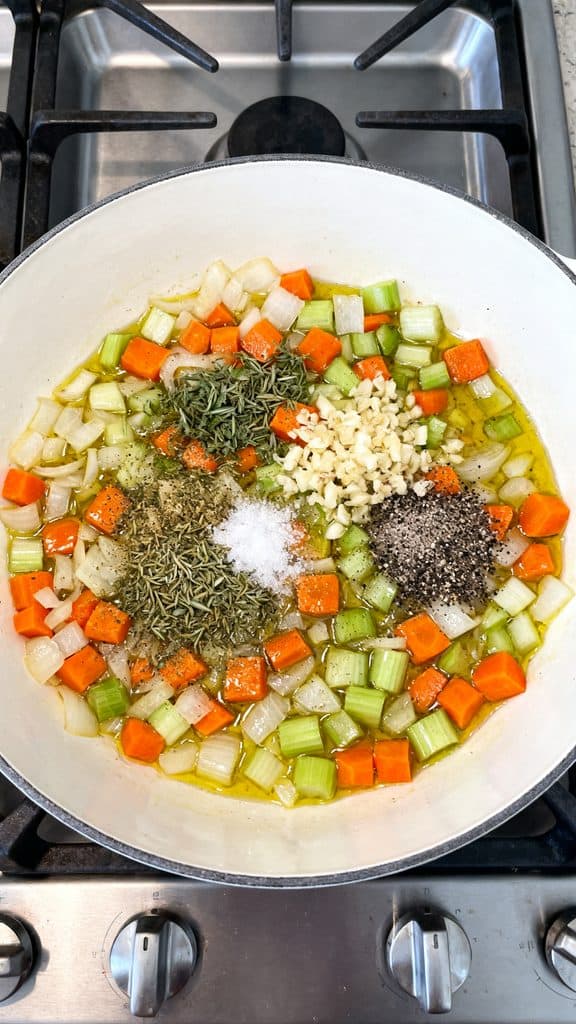
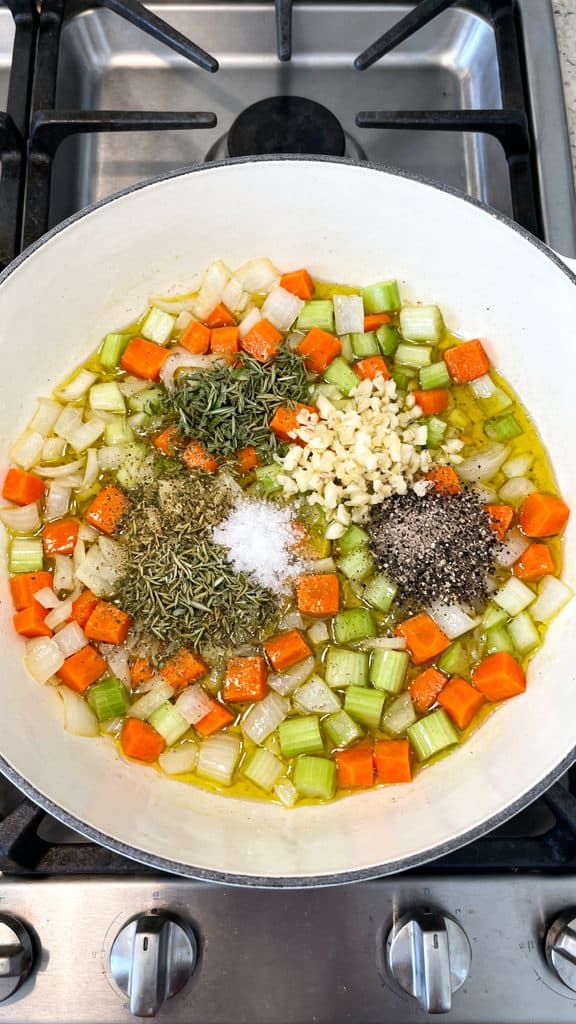
Add the 4 minced garlic cloves, 1 teaspoon Italian seasoning, ½ teaspoon dried thyme, ½ teaspoon fine salt, and ¼ teaspoon black pepper. Stir them into the softened onion, carrots, and celery. Cook for 30 to 60 seconds, just until the garlic smells good. Do not let it brown.
Step 4: Build the Soup
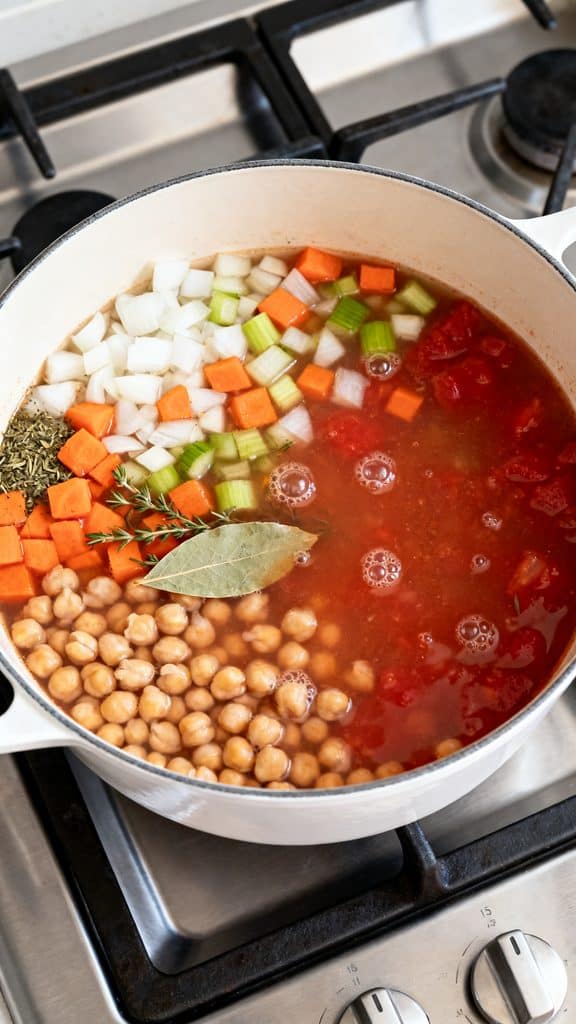
Pour in 1 can (14.5 ounces) diced tomatoes with their juices and 6 cups low-sodium vegetable broth. Add 2 cans (15 ounces each) chickpeas, drained and rinsed, and 1 bay leaf. Stir well and raise the heat to bring the soup to a gentle boil.
Step 5: Simmer the Soup
Lower the heat to medium-low. Partly cover the pot and let the soup gently simmer for 10 minutes. The carrots should become tender, the chickpeas should warm through, and the broth should pick up the flavor of the vegetables and herbs.
Step 6: Cook the Pasta
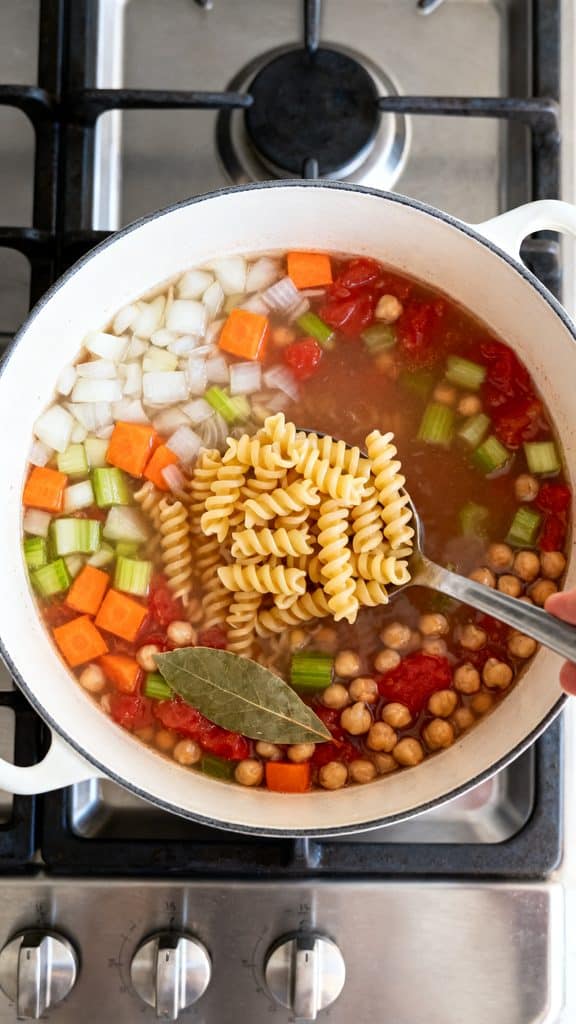
Stir 1½ cups dry ditalini pasta into the simmering soup. Cook uncovered according to the pasta package time, usually 8 to 10 minutes, stirring every couple of minutes so the pasta does not stick to the bottom. Stop cooking when the pasta is just tender.
Step 7: Add the Spinach and Lemon
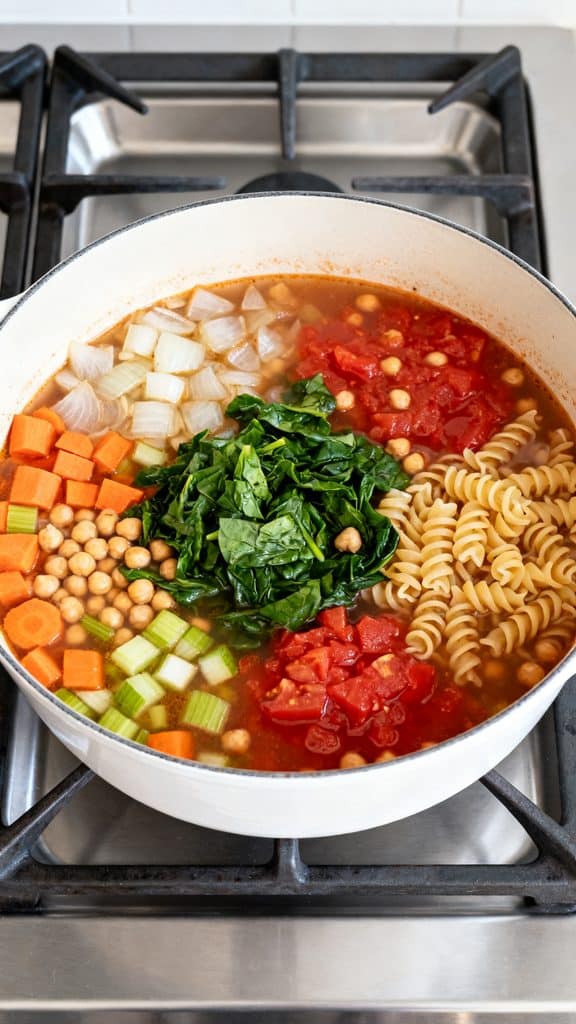
Remove and throw away the 1 bay leaf. Stir in the 2 packed cups chopped baby spinach from Step 1 and 1 tablespoon fresh lemon juice. Cook for 1 to 2 minutes, until the spinach wilts. Taste the soup and adjust the seasoning only if needed.
Step 8: Serve
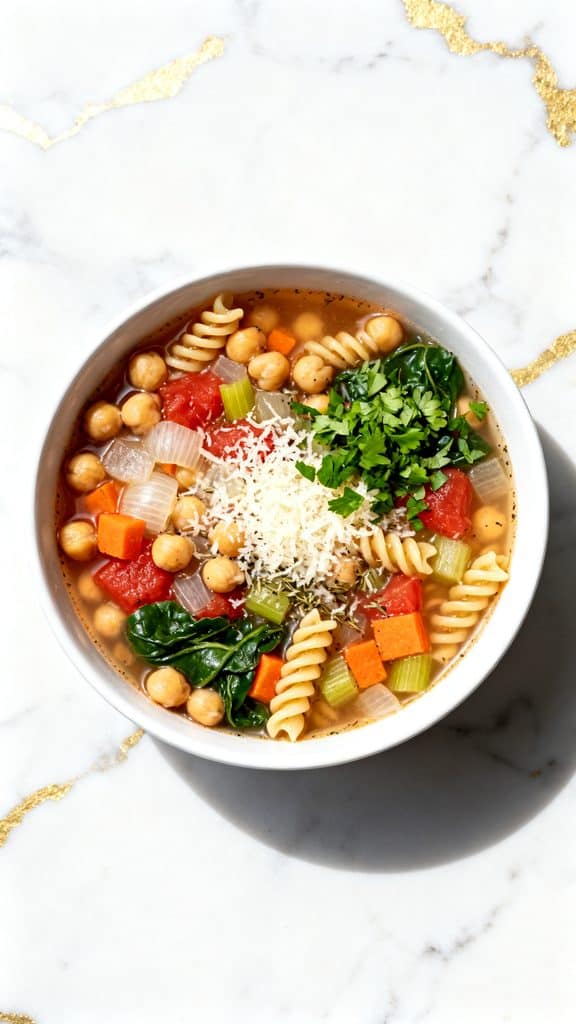
Ladle the hot soup evenly into 6 bowls. Divide 2 tablespoons finely grated Parmesan cheese and 1 tablespoon chopped fresh parsley over the servings. Serve right away while the pasta is tender and the broth is hot.
What You’ll Need
- 2 tablespoons olive oil
- 1 medium onion, diced
- 2 medium carrots, diced
- 2 celery stalks, diced
- 4 garlic cloves, minced
- 1 teaspoon Italian seasoning
- ½ teaspoon dried thyme
- ½ teaspoon fine salt
- ¼ teaspoon black pepper
- 1 can (14.5 ounces) diced tomatoes, with juices
- 6 cups low-sodium vegetable broth
- 2 cans (15 ounces each) chickpeas, drained and rinsed
- 1 bay leaf
- 1½ cups dry ditalini pasta
- 2 packed cups baby spinach, roughly chopped
- 1 tablespoon fresh lemon juice
- 2 tablespoons finely grated Parmesan cheese
- 1 tablespoon chopped fresh parsley
Why I Love This Recipe
This is the kind of soup I turn to when I want something filling without making dinner complicated. Chickpeas and pasta come straight from the pantry, while a few vegetables turn them into a meal that feels much more special.
I also love the way the broth changes as the pasta cooks. Some pasta starch slips into the broth and gives it a silky, slightly thicker feel. By the time the spinach and lemon go in, the whole pot tastes bright, cozy, and complete.
- It cooks in one pot, so cleanup is simple.
- Chickpeas and pasta make it hearty without needing meat.
- Most of the ingredients are easy pantry staples.
- Lemon wakes up the tomato and herb flavors.
- It is filling enough to serve as the main meal.
- You can change the vegetables based on what you have.
Why This Recipe Works (Quick Science)
Cooking the onion, carrots, and celery first builds flavor. Heat softens the vegetables and brings out their natural sweetness.
Garlic goes in later for a reason. Minced garlic cooks much faster than carrots or onion. Adding it later keeps it from burning and turning bitter.
The pasta helps thicken the soup. As pasta cooks, it releases some starch. That starch gives the broth more body.
Acid comes at the end. Lemon juice tastes brighter when it is added after most of the cooking is done.
Spinach needs very little heat. A minute or two is enough to wilt it while keeping its fresh color.
Tools You’ll Need
- Large Dutch oven or heavy soup pot
- Wooden spoon
- Chef’s knife
- Cutting board
- Can opener
- Colander
- Measuring cups
- Measuring spoons
- Liquid measuring jug
- Citrus juicer or reamer
- Soup ladle
Pro Tips
- Do not overcook the pasta. It keeps getting softer while sitting in hot soup, so stop when it is just tender.
- Stir after adding the pasta. Small pasta can settle on the bottom of the pot and stick.
- Keep extra broth handy. The pasta absorbs liquid as the soup sits. Add a splash of broth when reheating if it becomes too thick.
- Rinse the chickpeas well. This removes the thick canning liquid and gives the soup a cleaner taste.
- Wait until the end to add lemon. This keeps its flavor fresh and bright.
Substitutions and Variations
- Pasta: Use small shells, elbows, or another small pasta instead of ditalini. Cooking time may change.
- Gluten-free: Use a small gluten-free pasta and follow its package cooking time.
- Greens: Kale or Swiss chard can replace spinach. Add tougher greens a few minutes earlier.
- Broth: Chicken broth can replace vegetable broth if you do not need the soup to be vegetarian.
- Tomatoes: Crushed tomatoes can work, but they will make the broth thicker.
- Parmesan: Leave it out for a dairy-free version or use a dairy-free Parmesan-style topping.
- More heat: Add a pinch of crushed red pepper flakes with the dried herbs.
Make-Ahead Tips
For the best make-ahead soup, prepare the recipe through Step 5 but leave out the pasta, spinach, lemon, Parmesan, and parsley. Cool and refrigerate the soup base.
When you are ready to eat, bring the base to a simmer, add the pasta, and finish the remaining steps. This keeps the pasta from becoming too soft or soaking up too much broth.
Common Mistakes
- Adding the garlic too early: It can burn before the other vegetables soften.
- Boiling too hard: A gentle simmer gives you more even cooking.
- Forgetting to stir the pasta: Pasta can stick to the bottom of the pot.
- Overcooking the pasta: It can become very soft, especially in leftovers.
- Skipping the lemon: That small spoonful of acid makes the whole soup taste fresher.
- Adding lots of extra salt at the start: Broth, canned chickpeas, and Parmesan can all contain salt. Taste before adding more.
What to Serve With
This soup is filling on its own, but a simple side makes it even better.
- Warm garlic bread
- Crusty Italian bread
- Parmesan toast
- Simple green salad
- Roasted broccoli
- Roasted zucchini
- Tomato and cucumber salad
Macros Information
Approximate nutrition per serving, based on 6 servings:
- Calories: 390
- Protein: 15 g
- Carbohydrates: 63 g
- Fat: 10 g
- Fiber: 11 g
These numbers are estimates. The exact macros will change with the brands of pasta, chickpeas, broth, and Parmesan you use.
Leftovers and Storage
Let leftover soup cool, then place it in an airtight container. Refrigerate for up to 4 days.
The pasta will keep soaking up broth in the fridge, so the soup will become thicker. Add a little vegetable broth or water when reheating it on the stove or in the microwave.
For freezing, the best choice is to freeze the soup base without the pasta and spinach for up to 3 months. Pasta that is frozen inside soup can become very soft after thawing.
FAQ
Q: Can I use canned chickpeas?
A: Yes. This recipe is designed for canned chickpeas. Drain and rinse both cans before adding them.
Q: Can I use dried chickpeas?
A: Yes, but cook them first. You will need about 3 cups of fully cooked chickpeas for this recipe.
Q: Can I cook the pasta separately?
A: Yes. This is a great choice for meal prep. Cook the pasta separately and add some to each bowl before pouring the hot soup over it.
Q: Why did my soup get so thick?
A: Pasta absorbs broth as it cooks and sits. Stir in more vegetable broth until the soup reaches the thickness you like.
Q: Can I make it vegan?
A: Yes. Leave off the Parmesan or use a plant-based Parmesan-style topping.
Q: Can I freeze Chickpea Pasta Soup?
A: You can, but the pasta texture is better if you freeze the soup without it. Add freshly cooked pasta after reheating.
Q: Can I use chickpea pasta instead of regular ditalini?
A: Yes. Chickpea pasta works, but it can soften faster and may make the broth cloudier. Follow the package cooking time closely and check it early.
Final Thoughts
Chickpea Pasta Soup proves that simple pantry ingredients can make a really satisfying dinner. The chickpeas make it hearty, the pasta gives the broth body, and the little splash of lemon keeps everything fresh.
Make a pot, grab some warm bread, and enjoy it while it is hot. If you try the recipe, leave a comment about how it turned out, any changes you made, or any questions you have.
